Showing posts with label tasting jerusalem. Show all posts

Thursday, October 2, 2014

Fricassee Salad

Fricassee Salad 1

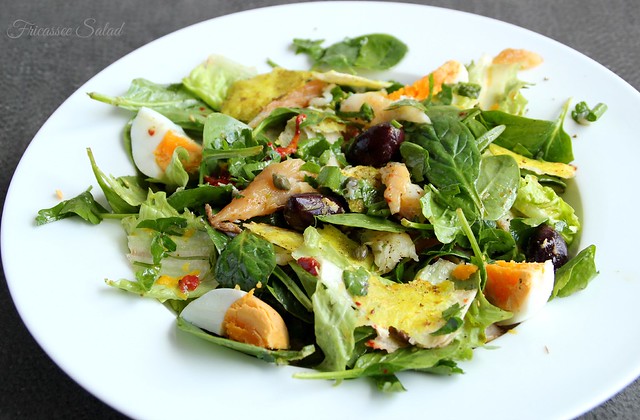
Just when I was thinking he couldn't surprise me any longer, Yotam Ottolenghi comes along and damn nearly blew my mind.

I've been cooking and posting Ottolenghi dishes for the last four and a half years, when I first introduced him to you with this Baked Aubergine with Saffron Yoghurt Sauce and Pomegranate.  We often hear the term "genre-bending" applied to movies, novels, works of art, and pieces of music - I'm not sure if such a term can be applied to food and cooking, but if it can then I'm sure it certainly applies here.  That was a dish unlike anything I'd eaten or cooked before, and it was for me the beginning of a whole new food journey.

Over this time, I've been stunned by the wonderful flavour and texture combinations Ottolenghi pulls together.  He's introduced me to unique ingredients, which I had never previously heard of, and which have now become part of my every day pantry staples.

Yet, even though ingredients such as harissa paste, preserved lemons, pomegranate molasses, za'atar, dried Persian limes, rose petals, and orange flower water, have all now become almost "common place" in my kitchen, the flavour punch that these ingredients deliver is anything but.

So it should have come as no surprise that this dish, adapted from Ottolenghi's book Jerusalem, completely knocked my socks off, but I was still seriously "wowed" by it.
Fricassee Salad 2

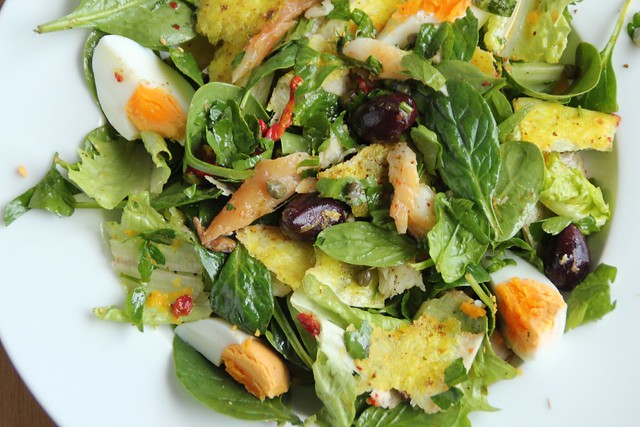
In his preface to the recipe, Ottolenghi says that "This salad is a deconstruction of Tunisian fricassee - a fried bun stuffed with tuna, harissa, olives, anchovies, a spicy pumpkin relish, pickled lemon, cooked potato and hard boiled egg."  He remarks that the resemblance to the classic French Nicoise salad is no coincidence, "and is evidence of the interaction between French and Tunisian cuisines during the years of French occupation".

I made a few changes to the recipe, mostly for the sake of convenience.  Firstly, the original recipe called for fresh tuna to be gently poached in oil and then left to stand for 24 hours.  For ethical reasons, much as I love tuna, I choose not to eat it.  And, although, I thought this technique could just as readily be applied to a nice piece of salmon, I was after lunch in half an hour - not tomorrow.  Ottolenghi does suggest a good canned tuna as a substitute for the confiting process, but it turned out I had a nice piece of smoked mackerel on hand and decided that would make an acceptable alternative.  Ottolenghi's recipe also calls for boiling potatoes in water flavoured with plenty of turmeric, but again I was looking for something a little more instant.  Instead I brushed a flour tortilla (any flat bread would do) with a mixture of olive oil and turmeric, for that gorgeous golden colour, and sprinkled it with a little za'atar for good measure, then baked until crisp, and crumbled it into the salad.

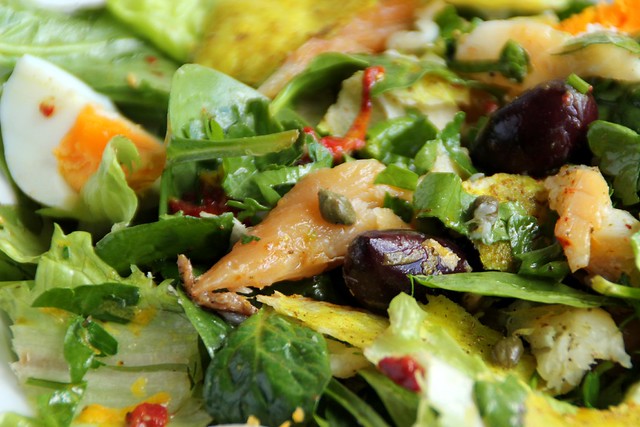
I'm sure the original recipe is sensational, and I will definitely take the time to make it as written (subbing in some salmon for the tuna) very soon, but this shortcut version made a fast, flavourful lunch that ticked all the boxes for me.  The bold combination of harissa, anchovies, black olives, capers, and preserved lemons packed a flavour punch that delivered so much more than I expected.

If you own a copy of Jerusalem, you will know that every time you pick it up (constantly), there are a couple of recipes that you frequently tell yourself "I have to make that", and yet somehow it hasn't happened yet.  Our mandate this month at Tasting Jerusalem* group is to do just that.  I had a couple of recipes lined up and let me tell you this was not one of them.  This was one of the recipes that I've kind of just skimmed over so many times and, if it wasn't for the fact that I was looking for lunch and recognised that I had pretty much all the ingredients on hand, I probably would have done so again.  I'm ever so grateful that this recipe stopped me in my tracks - it's worth so much more than a fleeting glance, and has definitely been bookmarked by me now as one of the standout recipes in the book.  I hope you'll give this a try.
Fricassee Salad 3

Fricassee Salad
Makes one very generous meal, or two appetisers
Adapted from recipe by Yotam Ottolenghi & Sami Tamimi
from Jerusalem: A Cookbook

150-200g (5-7 oz) smoked fish, flaked into bite sized chunks
1x flour tortilla
extra virgin olive oil
1/2 teaspoon turmeric
za'atar
anchovies, as many as you like (I used four), roughly chopped
1 tablespoon harissa paste
capers, again as many as you like
1/4 of a preserved lemon, rind only (flesh discarded), thinly sliced
black olives, as many as you like
1x fresh lemon, zest and juice
1/2 roasted red pepper, cut into thin slices
1x boiled egg, shelled and quartered
2x generous handfuls salad greens (I used a mixture of baby spinach & cos)
1x generous handful flat-leaf parsley, roughly chopped
flaky sea salt & freshly ground black pepper

Preheat oven to 180 degrees C (350 degrees F).  Mix 1 tablespoon of extra virgin olive oil and the turmeric together to make a paste, and brush over the surface of the flour tortilla.  Sprinkle liberally with za-atar. (If you don't have za'atar, try a sprinkling of dried thyme and sesame seeds instead.)  Place on a tray and bake in the preheated oven until puffed and crispy - this will only take a few minutes.  Remove from oven and set aside to cool.  It will crisp up some more as it cools down.

Place anchovies, harissa paste, capers, black olives and preserved lemon rind in a small bowl.  Add plenty of freshly ground black pepper and a generous slosh of olive oil (I used the oil that the roasted peppers had been preserved in).  Toss together gently to combine.

Place salad greens, parsley, red peppers, and flakes of smoked fish in a large bowl.  Season with just a touch of flaky sea salt, and add the grated zest of the lemon, along with its juice.  Gently combine.

Now add the anchovy mixture to the salad bowl, and toss gently to combine everything well.  Place everything in a serving bowl.  Arrange boiled eggs over the top, and finish with another drizzle of extra virgin olive oil.  Serve immediately.

If you're interested in more great food from Ottolenghi check out Jerusalem and his other great titles available from Amazon USA, Amazon UK or Fishpond NZ.

* Have a look also at what my "Tasting Jerusalem" friends have been doing - you'll find plenty of great inspiration. (“Tasting Jerusalem is a virtual cooking community exploring the vibrant flavors and cuisine of the Middle East through the lens of “Jerusalem: A Cookbook” by Ottolenghi and Tamimi published by Ten Speed Press. You can follow along and cook with us by subscribing to omgyummy.com, following the hashtag #TastingJrslm on Twitter and Instagram, liking our Facebook page or joining our Google+ Community and finally checking out all of our groups’ dishes on Pinterest.”)

Sunday, August 24, 2014

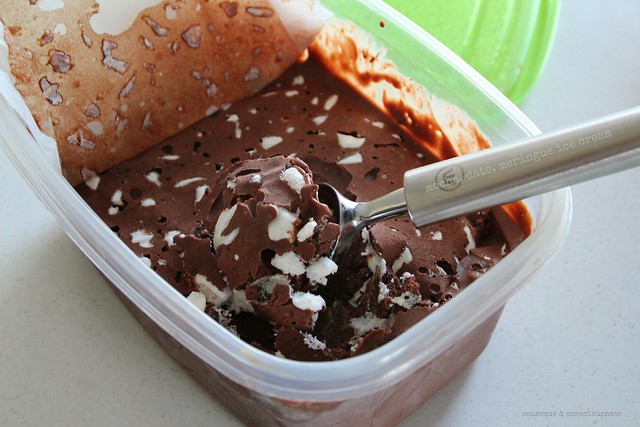
Mocha, Date & Meringue Ice Cream

Mocha, Date & Meringue Ice Cream 2

Pot Luck week at I Heart Cooking Clubs is always one of my favourite weeks, because it means that we get to cook with any one of our ten IHCC chefs.  For me that usually means the irresistible opportunity to catch up once again with my favourite chef, Yotam Ottolenghi.

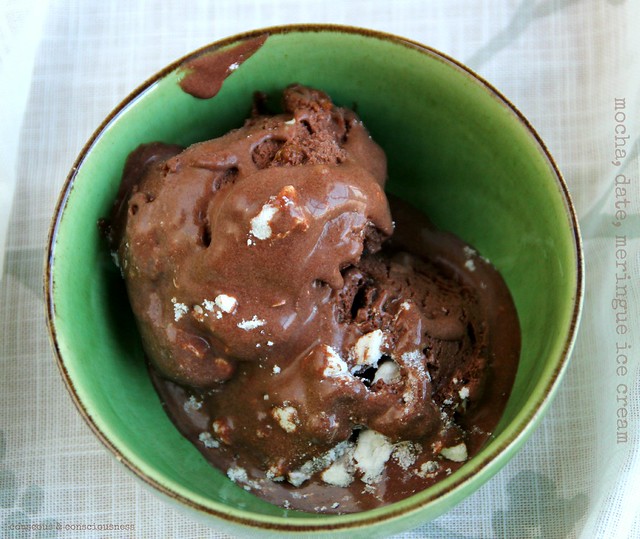
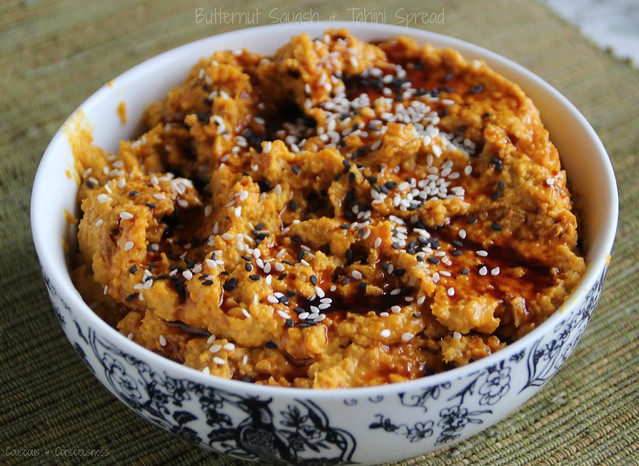
This is timely, because this month at Tasting Jerusalem** we are exploring cooking with date syrup, through the lens of Ottolenghi's book Jerusalem.  I've use date syrup a few times before in dishes such as this Butternut Squash & Tahini Spread, which is finished off with a drizzle of date syrup.

Butternut Squash & Tahini Spread 2

Date syrup has a consistency similar to maple syrup, agave nectar, brown rice syrup or runny honey, and makes a great substitute anywhere you would use any of those ingredients, but the flavour is so much more, for want of a better word, "exotic" and complex than any of them.  The sticky sweetness of dates, combined with the intense flavour and aroma of rosewater, makes for an ingredient that will transport you to places far flung.

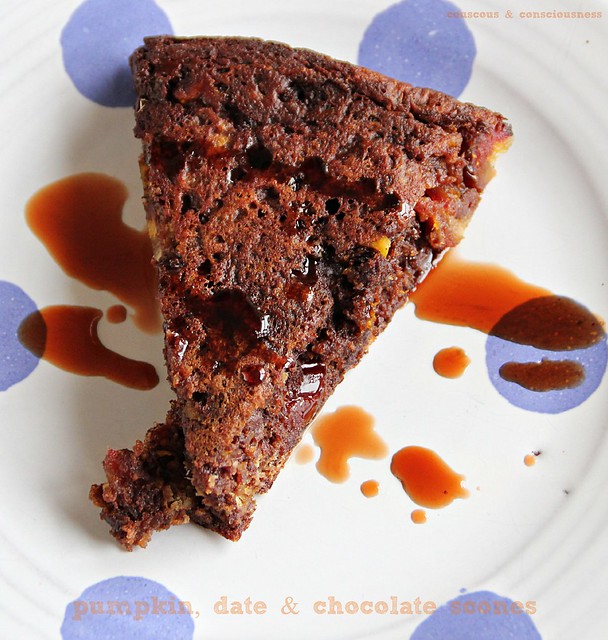
I've also used date syrup in these Pumpkin, Date & Chocolate Scones ...

Pumpkin, Date & Chocolate Scones 4

... but today I wanted to come up with something that was altogether more indulgent and which really played to the exotic nature of this ingredient.

Doing a little research, I found my inspiration in Ottolenghi's recipe for Chocolate, Rose & Walnut Ice Cream.  This seemed like a good starting point, and I thought I could come up with my own version.

To start with, I simplified the whole process by using a combination of coconut cream, condensed milk, and melted dark chocolate, instead of the typical custard base used in the original recipe.  Since I had decided I was going to work date syrup into the recipe, I didn't need rose water, as that flavour is already sufficiently pronounced in the syrup.  I also wanted actual dates in the ice cream, as well as the syrup, so I soaked them in some freshly brewed espresso to soften them, before swirling into the ice cream.  And for that all important crunch, I replaced the walnuts and digestive biscuits Ottolenghi used, with some crumbled meringues.  I love the way they hold their texture, and keep that little bit of "chewiness" even once frozen.  I did think about also including some cacao nibs, but I think it would have been an ingredient too far, and the depth of chocolate flavour here is more than sufficient without it.

Ottolenghi served his ice cream with chocolate sauce drizzled over the top, which seemed a bit unnecessary in the circumstances, and some little cubes of Turkish delight sprinkled over the top.  I think this would have been delightful, but I didn't have any on hand.  He also finished with a little sprinkling of dried rose petals - another delightful touch, which I did have and would have added, but the ice cream was melting and for the life of me I couldn't find them in the cupboard (note to self:  time to give the cupboard a clean out!)

In the end, this ice cream is everything I wanted it to be.  Rich and chocolatey and almost fudgy;  there are delightful little of nuggets of chewy dates and crunchy meringues;  the date and rose flavours really come through without overpowering, and linger long enough on the palate to tantalise the mind with thoughts of far flung places.  I think I should have called this Magic Carpet Ice Cream.

Mocha, Date & Meringue Ice Cream 1

Mocha, Date & Meringue Ice Cream Recipe
Inspired by a recipe by Yotam Ottolenghi
Makes about 1 litre
Download the free recipe card here

1/2 cup finely chopped, dried dates
3 tablespoons freshly brewed espresso
1 tablespoon date syrup
400ml (13.5 fl oz) coconut milk
2/3 cup sweetened condensed milk
200g dark chocolate, melted (I used Whittaker's Dark Ghana)
40g (1-1/2 oz) crumbled meringues

Place chopped dates in a small bowl.  Pour over the hot espresso and date syrup.  Stir to combine, and set aside until the dates have softened, and mixture has cooled.

Break chocolate into smallish pieces.  Place in a bowl over a pot of gently simmering water, making sure the water is not actually touching the bowl.  Stir from time to time, until the chocolate is melted and glossy.  Set aside and allow to cool completely, but without re-solidifying.

In another bowl, beat together the coconut milk, condensed milk and melted chocolate, until everything is well combined.

Churn in an ice cream maker according to manufacturer's instructions.

Empty ice cream into a freezer safe container.  Stir in the softened dates and crumbled meringues.  Cover the surface of the ice cream with a piece of non-stick baking paper, and put in the freezer to firm up.

Serve generously whenever you have itchy feet.

If you would like to get to know Yotam Ottolenghi a little better or any one of our other IHCC chefs, then do go and visit my friends at I Heart Cooking Clubs and see what they've all cooked up for Pot Luck week.

IHCC Ottolenghi Leek Badge resized

** Tasting Jerusalem is a virtual cooking community exploring the vibrant flavors and cuisine of the Middle East through the lens of Jerusalem: A Cookbook by Ottolenghi and Tamimi published by Ten Speed Press. You can follow along and cook with us by subscribing to omgyummy.com, following the hashtag #TastingJrslm on Twitter and Instagram, liking our Facebook page or joining our Google+ Community and finally checking out all of our groups’ dishes on Pinterest.

I'll also be sharing this post at See Ya In the Gumbo hosted by the lovely, and very amusing, Michelle at Ms. enPlace, at Weekend Cooking hosted by Beth Fish Reads, and at Foodie Friday hosted by Designs by Gollam.


See Ya in The Gumbo Badge      Weekend Cooking Badge    

I will also be submitting this post to Sweet New Zealand.  Inspired by Alessandra Zecchini, and hosted this month by Michelle at Munch Cooking, Sweet New Zealand is an event for all Kiwi bloggers (whether living at home or abroad), or all foreign bloggers living in New Zealand, to link up their sweet treats.

Sweet New Zealand Badge A


Sunday, June 22, 2014

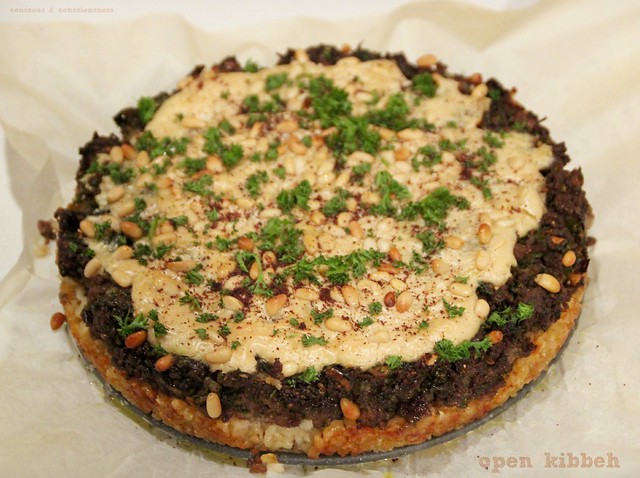
Open Kibbeh

Open Kibbeh 2

This month at Tasting Jerusalem*, we're exploring tahini - a paste made from grinding sesame seeds, which is a key ingredient in many Middle Eastern dishes, most well-known probably being hummus.

In the past, I've made a few dishes using tahini from my favourite cookbook, Yotam Ottolenghi's "Jerusalem" ...

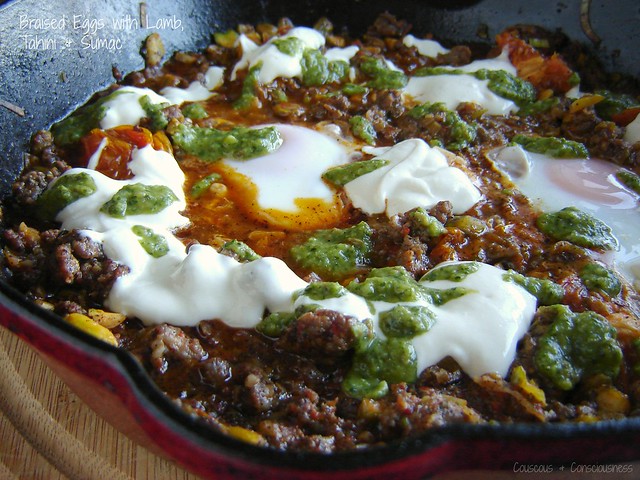
... Braised Eggs with Lamb, Tahini & Sumac (one of my all-time favourite Ottolenghi dishes),

Braised Eggs with Lamb, Tahini & Sumac 1

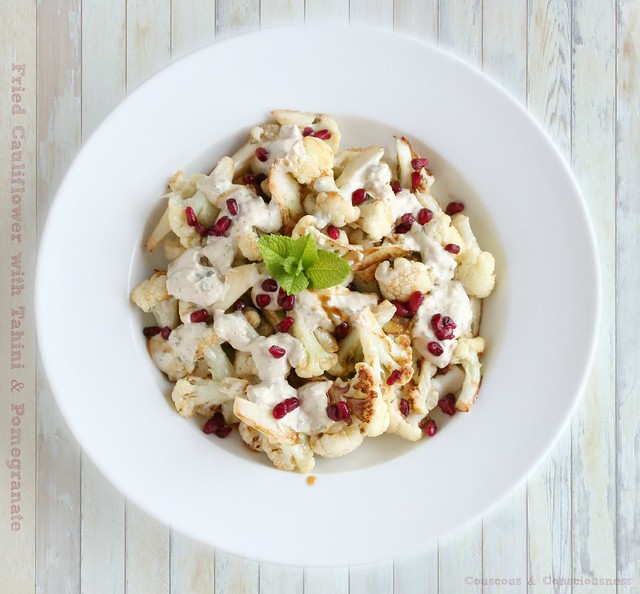
... Fried Cauliflower with Tahini & Pomegranate,

Fried Cauliflower with Tahini & Pomegranate 2

... Butternut Squash & Tahini Spread,

Butternut Squash & Tahini Spread 2

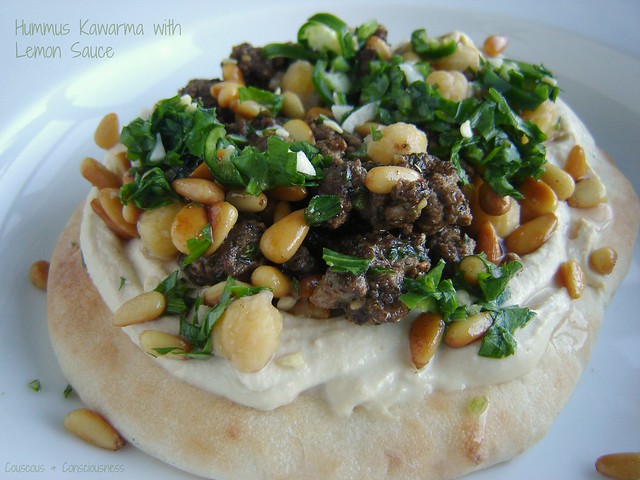
... and the insanely, insanely, insanely good Hummus Kawarma with Lemon Sauce.

Hummus Kawarma with Lemon Sauce 1

But I was yet to try the Open Kibbeh.  I'd had this one bookmarked for ages, and with this week being Pot Luck week at I Heart Cooking Clubs, it seemed like the ideal opportunity to give this dish a try.  Kibbeh is a Middle Eastern dish, most commonly prepared (as I understand it) as a kind of bulghur wheat croquette, stuffed with minced lamb, and served with a tahini sauce.

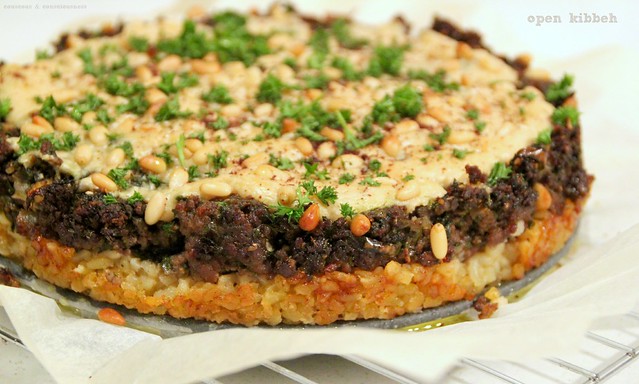
In this less conventional version, the kibbeh is prepared more like a kind of savoury "cake".  A base of bulghur wheat, topped with fragrant, spicy lamb, all topped off with a tahini sauce.

Once again, Ottolenghi did not disappoint me.  This was a wonderfully flavourful dish - great for a wintery evening, and would be excellent for a weekend lunch dish as well.  When I was a kid, my grandmother often made an Indian dish of Potato Cutlets - patties made of mashed potato, filled with savoury mince, and then fried until crispy and golden.  The flavours and textures of Ottolenghi's Open Kibbeh filled me with nostalgia, reminding me a great deal of those potato cutlets of my childhood.

I made only very minimal changes to the recipe - I used banana shallots instead of onions, replaced the spices called for in this recipe with some of the baharat spice mixture I made a while back, and cut down the oil a little.

The final dish is best served warm or at room temperature, rather than straight out of the oven - it's also likely to fall to bits if you try to serve it too hot - and in typical Ottolenghi fashion is a triumph of taste and texture.  You can be sure that I will be making this again - I hope you will try it too.

Open Kibbeh 1.jpg

Open Kibbeh Recipe
Adapted from recipe by Yotam Ottolenghi & Sami Tamimi
from Jerusalem, A Cookbook
Serves 4 as a light meal with salad
Click here for a printable copy of this recipe

125g (4oz) bulghur wheat
olive oil
1x large banana shallot, finely chopped
2x cloves garlic, crushed
1x green chilli, finely chopped (remove seeds if you don't want the heat)
350g (12 oz) minced lamb
3 teaspoons baharat spice mixture
large handful fresh coriander, roughly chopped
large handful fresh parsley, roughly chopped
flaky sea salt & freshly ground black pepper
generous handful of pine nuts
2 tablespoons self raising flour
1 tablespoon of olive oil
2-3 tablespoons tahini paste
juice of half a lemon
warm water
flaky sea salt

To finish:
sumac
fresh parsley, roughly chopped
extra virgin olive oil

Preheat oven to 190 degrees C (375 degrees F).  Lightly grease a 20cm springform or loose-bottomed cake tin, and line the base with non-stick baking paper.

Put bulghur wheat in a small bowl, cover with boiling water, and set aside for 30 minutes.

Meanwhile,  heat a little olive oil (about 1 tablespoon) in a large frying pan set over medium heat.  Add chopped shallots, garlic, and chilli to the pan, and saute until softened.  Add the lamb, and continue to saute until the lamb is lightly browned - about 5 minutes.

Stir in the baharat spice, coriander, parsley, about two-thirds of the pine nuts, and a generous pinch each of flaky sea salt and freshly ground black pepper.  Cook for a couple more minutes.  Remove from heat, taste and adjust seasoning as necessary.

Strain any remaining liquid off the bulghur.  Add the flour, 1 tablespoon of olive oil, and a pinch each of salt and black pepper.  Work with your hands till you have a mixture that is starting to hold together.  Tip the wheat into the prepared cake tin, and press firmly over the base of the tin - I found it easiest to work with slightly wet hands.  Spread the wheat out into an even layer which is quite firmly compacted.  Spread the lamb mixture evenly over the top of the wheat, and again press down quite firmly.

Bake in preheated oven until the lamb is hot and well browned - about 20 minutes.

Meanwhile prepare the tahini sauce.  Mix tahini paste with the lemon juice and a pinch of flaky sea salt.  Then add enough warm water (a little at a time), until you reach a sauce which is thick yet pourable.

Remove the kibbeh from the oven.  Pour tahini sauce evenly over the top, sprinkle with the remaining pine nuts, and return to the oven until the tahini is set and lightly browned and the pine nuts are golden.

Remove from the oven and leave to cool to room temperature before removing from the tin.  To serve, sprinkle over fresh parsley and sumac, and finish with a drizzle of extra virgin olive oil.

If you would like to get to know Yotam Ottolenghi a little better or any one of our other IHCC chefs, then do go and visit my friends at I Heart Cooking Clubs and see what they've all cooked up for Pot Luck week ...

IHCC Ottolenghi Leek Badge resized

... or check out Jerusalem and Ottolenghi's other great titles available from Amazon USA, Amazon UK or Fishpond NZ.

* Have a look also at what my "Tasting Jerusalem" friends have been doing - you'll find plenty of other great uses for the tahini, along with other interesting ingredients as well. (“Tasting Jerusalem is a virtual cooking community exploring the vibrant flavors and cuisine of the Middle East through the lens of “Jerusalem: A Cookbook” by Ottolenghi and Tamimi published by Ten Speed Press. You can follow along and cook with us by subscribing to omgyummy.com, following the hashtag #TastingJrslm on Twitter and Instagram, liking our Facebook page or joining our Google+ Community and finally checking out all of our groups’ dishes on Pinterest.”)
I'll also be sharing this post at See Ya In the Gumbo hosted by the lovely, and very amusing, Michelle at Ms. enPlace, at Weekend Cooking hosted by Beth Fish Reads, and at Foodie Friday hosted by Designs by Gollam.


See Ya in The Gumbo Badge      Weekend Cooking Badge    


Thursday, May 22, 2014

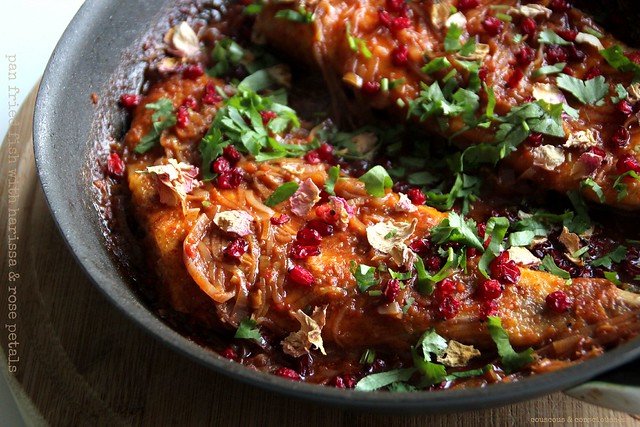
Pan Fried Fish with Harissa & Rose Petals and A Taste for the Exotic

Pan Fried Fish with Harissa & Rose Petals 2

If you're one of my regular visitors, you will know that my absolute cooking hero is the highly inspirational Yotam Ottolenghi, and one of my favourite cookbooks is "Jerusalem: A Cookbook".  Good thing then that this week is Potluck week at I Heart Cooking Clubs, which means that we can cook any recipe we like from any one of our ten IHCC chefs, and for me that means checking back in with Ottolenghi.  It also means reconnecting with my friends in the Tasting Jerusalem group, where our special ingredient this month is harissa.

Now, I'm not going to tell you all about harissa here or tell you how to make it - I've done all that before and you can read all about it here.  I am however going to seriously recommend you do have a go at making some though, whether you use my recipe or Ottolenghi's (which is on page 301 of Jerusalem if you happen to have it).  Yes, store bought is fine, but seriously a very small investment in ingredients, effort and time will yield a substantial quantity.  It freezes really well, and once you've used it you will always want to have some on hand.

Wondering where or how you might use it?  Then check out some of these dishes in which I've used harissa for a little inspiration ...
Harissa Marinated Tarakihi with Lemony Couscous & Tzatziki
Braised Eggs with Lamb, Tahini & Sumac
Shakshuka
or try a little Green Harissa.


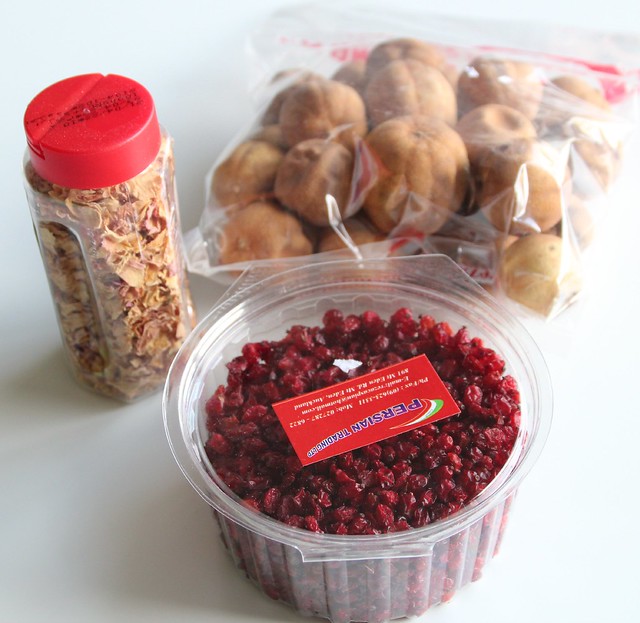
Now before I move on to telling you about this dish, I want to talk a little bit about a few unusual ingredients, and some great new finds.  This is really more for the benefit of my Kiwi peeps, so everyone else please feel free to skip the next paragraph or so.  Of course, those of you who live in the main centres of Auckland, Wellington and Christchurch are pretty well catered for when it comes to trying to track down unusual ingredients.  In fact, just yesterday, on a flying visit to Auckland, I discovered the Persian Trading Co on Mt Eden Road, where I found dried Persian limes, barberries, and dried rose petals, ingredients I had been trying to find for a long time.  So, if you happen to live nearby, this little Aladdin's Cave of wonderful ingredients is well worth a visit.

Persian ingredients.jpg

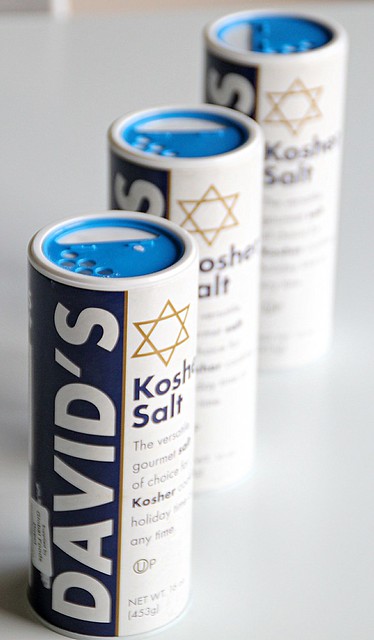
If, however, you happen to live in the provinces, as I do, and if your tastes tend to run to the exotic, as mine do, then sourcing more unusual ingredients can be challenging.  We usually have to turn to online resources and I recently discovered a great online supplier called Global Foods Direct.  They have a fantastic selection of products (including my beloved kosher salt) that I can't get where I live, their prices are reasonable, and they were a pleasure to deal with.  They will definitely be getting a lot more orders from me!

Kosher Salt

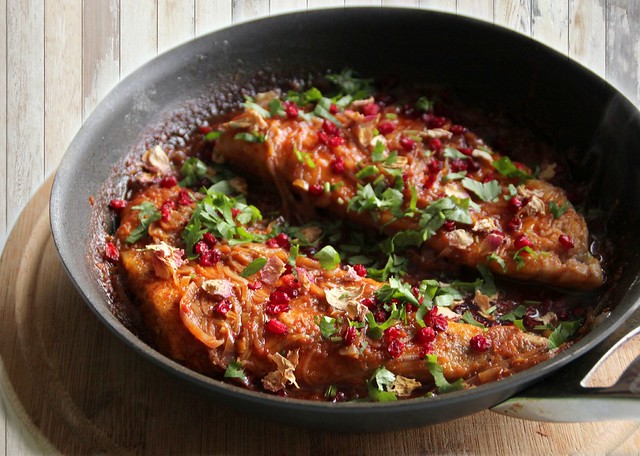
Now back to the dish.  In his introduction to this recipe, Ottolenghi says, "This dish originates from Bizerte, the northernmost city in Africa.  It is sweet and spicy and beautifully aromatic."  He's not wrong about that.  While this is cooking your kitchen will smell amazing, a world away from the usual kind of 'fishy" cooking smells you might encounter.  Ottolenghi also suggests that this dish can be served warm or at room temperature.  By virtue of the fact that dinner in my house is presently made in the middle of the afternoon in order to capture an even half way decent photo of it (I know you can all relate), mine was indeed room temperature.  I don't think it suffered any for that though, in fact I think it probably benefited from the opportunity for all the flavours to develop and mingle in the meantime.

This dish offers an intriguing combination of flavours, which you might not normally think to put with fish.  There is of course the obvious kick of heat from the harissa, some warming spices by way of some cinnamon and cumin, acidity from vinegar balanced out with sweetness from some honey, sharp, tangy bursts of flavour from barberries (which I used in place of currants), and the exotic fragrance of rose water and rose petals.

This would be a great dish to serve for company - it's quick and simple to prepare, and yet a combination of unusual ingredients and visual appeal will make it a stand-out dish.

My changes to the recipe were minimal - just subbing in barberries for currants as I already mentioned, replacing onions with leek (as that is generally my allium of choice), increased the amount of harissa a bit, and just adjusted a few other quantities to suit.  This would serve two people as a substantial main course, with some rice or couscous and a simple spinach salad, or four as a lighter meal.

Pan Fried Fish with Harissa & Rose Petals 1

Pan Fried Fish with Harissa & Rose Petals Recipe
Adapted (slightly) from recipe by Yotam Ottolenghi & Sami Tamimi
from Jerusalem:  A Cookbook
Serves 2 to 4
Click here for a printable copy of this recipe

400g (14 oz) firm-fleshed, white fish (I used snapper)
2 tablespoons harissa
1 heaped teaspoon ground cumin
pinch of flaky sea salt

2 tablespoons olive oil
plain flour
1 leek, cut in half lengthwise, then thinly sliced crosswise
2 tablespoons harissa
1/3 cup red wine vinegar
1 teaspoon ground cinnamon
flaky sea salt & freshly ground black pepper
3/4 cup water
1-1/2 tablespoons honey
rosewater (between 1 teaspoon & 1 tablespoon depending on your taste)
generous handful of barberries (or currants)
large handful of fresh coriander, roughly chopped
1 to 2 teaspoons of dried rose petals

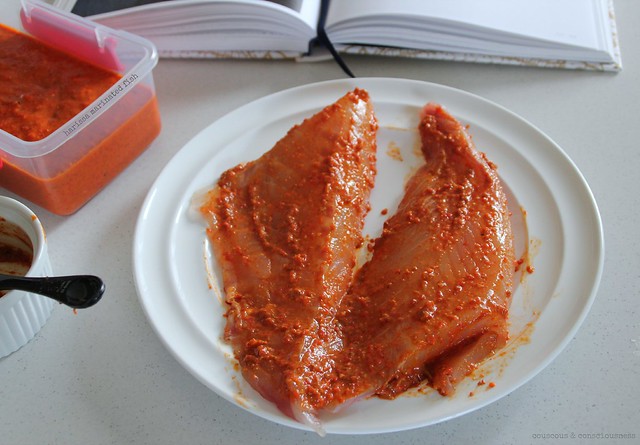
Begin by marinating the fish.  Cut the fish into serving size portions.  In a small bowl, mix together the first measure of harissa, cumin and flaky sea salt, to make a paste, and rub it all over the fish, making sure it's well coated.  Set aside to marinate for approximately 2 hours.

Harissa Marinated Fish

Set a large, non-stick frying pan over medium heat, and add olive oil to the pan.  While the oil is heating dust the fish liberally, both sides, with flour and shake off the excess.  Add the fish to the hot pan (working in batches if necessary), and cook the fish until golden and not quite cooked through - about 2 minutes on each side.  Remove fish from the pan, retaining the oil in the pan, and set aside.

Add the sliced leeks to the pan, and saute gently, stirring from time to time, until they are completely softened - about 5 minutes.

Add the second measure of harissa to the pan, along with the vinegar, cinnamon, a generous pinch of flaky sea salt and plenty of ground black pepper.  Add the water, stir to combine everything well, reduce the heat and simmer gently until you have a fairly thick sauce - about 10 minutes.

Add the honey, rosewater and barberries to the pan and simmer for another minute or two.  Taste and adjust seasoning to your liking.

Return the fish to the pan, spooning some of the sauce over the top, and simmer gently for a few minutes until the fish is warmed through - add a little more water if your sauce has become too thick.

Remove from heat and sprinkle over the coriander and rose petals.  Serve with plain rice or couscous.

If you would like to get to know Yotam Ottolenghi a little better, then do go and visit my friends at I Heart Cooking Clubs and see what they've all cooked up ...

IHCC Ottolenghi Leek Badge resized

... or check out Jerusalem and Ottolenghi's other great titles available from Amazon USA, Amazon UK or Fishpond NZ.

Have a look also at what my "Tasting Jerusalem" friends have been doing - you'll find plenty of other great uses for the harissa you now have in your spice cupboard, along with other interesting ingredients as well. (“Tasting Jerusalem is a virtual cooking community exploring the vibrant flavors and cuisine of the Middle East through the lens of “Jerusalem: A Cookbook” by Ottolenghi and Tamimi published by Ten Speed Press. You can follow along and cook with us by subscribing to omgyummy.com, following the hashtag #TastingJrslm on Twitter and Instagram, liking our Facebook page or joining our Google+ Community and finally checking out all of our groups’ dishes on Pinterest.”)
I'll also be sharing this post at See Ya In the Gumbo hosted by the lovely, and very amusing, Michelle at Ms. enPlace, at Weekend Cooking hosted by Beth Fish Reads, and at Foodie Friday hosted by Designs by Gollam.


See Ya in The Gumbo Badge      Weekend Cooking Badge    


Thursday, September 5, 2013

Maqluba

Maqluba 4

As we start to near the end of our incredible journey with Yotam Ottolenghi, our theme this week at I Heart Cooking Clubs is "New to Me" - an opportunity to explore ingredients, cooking techniques or cuisines which are new or relatively unfamiliar to us.

This happily coincided with our Tasting Jerusalem challenge to use the spice blend known as baharat, which is definitely a new to me ingredient.  According to several sources I found, baharat is a blend of several spices, very common in Middle Eastern cooking, for flavouring fish, meat and stews, as well as grains and pulses..  The spices which are included will vary geographically, and no doubt from one household to another as well, but you will most likely find a combination of the following spices: black pepper, coriander, paprika, cardamom, nutmeg, cumin, cloves, and cinnamon.  Some of you maybe be able to find baharat at your local Middle Eastern store, but I had to make my own.  I found numerous recipes (I'm sure there are a gazillion out there), but since I was going to use it in an Ottolenghi dish, I used Ottolenghi's version from "Jerusalem:  A Cookbook".  This version didn't include paprika as I had seen in some other versions, and I also found that many of the other versions I check out had considerably more pepper than Ottolenghi's.  I think next time I would definitely like to try the inclusion of paprika, and probably double the amount of black peppercorns.  I would probably also increase the cinnamon slightly and reduce the cloves a bit.  But that's just me.

The Maqluba is a sensational dish - definitely what I would call family celebration fare.  There's a little bit of effort involved in prepping this dish, so it's not a mid-week throw it together in 15 minutes kind of dinner.  But I did take a couple of little shortcuts to make life easier, and to also make a slightly healthier version.  The essence of the dish is layers of tomatoes, fried aubergine, fried cauliflower, poached chicken, rice and spices all cooked in a stock made from the chicken, until the rice has absorbed all the liquid and you can turn the dish out like a giant "cake".

Turned out it looks pretty impressive, if not exactly "beautiful" - certainly not the most photogenic dish I've produced.  Like every Ottolenghi dish I've tried so far though it is a triumph of taste and textures, and delicious on its own (even better the second day), and a side of yoghurt and cucumber sauce turns it into sublime.  I hope you can find the time and occasion to make this dish - it's definitely worth the effort.

Some changes I made to the original recipe:  Fresh tomatoes are not a happening thing in these parts right now, so I used some slow-roasted tomatoes from my freezer, along with a couple of tinned tomatoes, torn into pieces.  Aubergine are not exactly seasonal here right now either, and worth a king's ransom, but I did push the boat out to splurge on one of these beauties instead of the two called for in the recipe - the one I had was largish (that is, bigger than what I would call medium, but smaller than what I would call large - can you tell I'm not a black or white person), and I think it was enough.  Instead of frying the aubergine in oil, I brushed with a little oil and baked the slices in the oven until golden - less oil, less mess, and less of my time standing over a frypan!  The recipe also called for frying the cauliflower, but I blanched it instead - once again, less mess, no standing over a frypan, and healthier.  No doubt, there is an extra dimension of flavour that comes from frying these ingredients that I would have lost (of course fried food tastes better!), and if you feel inclined to stand around over pots of hot oil, flipping and turning, then knock yourself out - personally, it was a small sacrifice I was prepared to make for a healthier, more fuss-free version, and there is so much going on in this dish that I don't think I missed out on much.  I also used a bit less chicken than called for in the original recipe, simply because that was what I had on hand, and I didn't find that the extra was needed.  Another observation I did have ... you may have seen my recent post, in which I enjoyed this dish at a delicious lunch I shared at Ephesus Restaurant with Beth Lee.  That was my first experience of this dish and, as such, became my benchmark for it.  In that version, cinnamon was definitely a dominant flavour, and I found that was less so in Ottolenghi's version - I missed that, and I would definitely increase the amount of cinnamon next time.   

Maqluba 5

Maqluba Recipe
Adapted from recipe by Yotam Ottolenghi & Sami Tamimi
from Jerusalem:  A Cookbook
Makes 4 to 6 generous servings
Click here for a printable copy of this recipe

olive oil
1x large or 2x medium aubergine, cut crosswise into 0.5cm (1/4") slices
1-1/2 cups basmati rice
500g (1 lb) skinless, boneless chicken thighs
1 leek, halved lengthwise, washed, and cut into chunks
10 black peppercorns
2 bay leaves
1 medium cauliflower, cut into medium sized florets
8x slow-roasted tomato halves, plus 3x whole canned tomatoes roughly torn,
or substitute 3-4 medium fresh tomatoes, cut into 0.5cm (1/4") slices
4x large garlic cloves, halved
1 teaspoon ground turmeric
1 teaspoon ground cinnamon (next time I would double this amount)
1 teaspoon ground allspice (next time I would halve this amount)
1/4 teaspoon ground black pepper
1 teaspoon baharat spice mix (store-bought, or see recipe page 299 of Jerusalem: A Cookbook)
generous handful of walnuts sauteed in butter until golden

1 cup natural Greek style yoghurt
1/2 telegraph cucumber, peeled, deseeded & finely chopped
large handful fresh coriander, finely chopped
generous pinch of salt

Wash the rice thoroughly and soak in cold water with 1 teaspoon of salt for at least 30 minutes.

Preheat oven to 220 degrees C (425 degrees F).

Spread aubergine slices out, in a single layer, on a baking tray lined with non-stick baking paper.  Brush aubergine slices with olive oil on both sides, and put tray into the preheated oven.  Bake until the aubergine is golden, turning them over half way through.  Remove from the oven and set aside.

Roasting Eggplant Collage

Meanwhile, heat a small amount of olive oil in a large saucepan.  Add the chicken to the pan and sear until golden brown on both sides.  Add the chopped leek, bay leaves, peppercorns and 4 cups of water.  Bring to a boil, cover, and simmer over low heat for about 20 minutes.

Maqluba 1

Remove chicken from the liquid and set aside.  Strain the stock and reserve for later.

While the chicken is cooking, bring a medium sized pot of lightly salted water to the boil, add the cauliflower, and cook until only just fork tender.  Remove from heat and drain.

Lightly oil the base and sides of a saucepan or casserole dish that is 24-26cm (9-10") in diameter and 12cm (5") deep (I used a cast iron Dutch oven).  Line the base with a circle of non-stick baking paper, and then begin to layer up the dish.

To begin with, arrange tomatoes in a single layer over the base of the casserole, and top with the aubergine slices.  Arrange the cauliflower florets over the aubergines, and top with the chicken thighs (roughly sliced).  Drain the rice, spread over the chicken, and top with the garlic halves.  Add all the spices and 1 teaspoon of salt into 3 cups of the reserved stock, whisk to mix well, and pour over the rice.  Press firmly down with your hands to make sure all the rice is submerged in the stock, adding a little more stock or water if necessary to cover everything.

Maqluba 2

Set the casserole over medium heat and bring to a boil.  Reduce to simmering, cover the casserole, and cook over low heat for 30 minutes (don't be tempted to lift the lid during that time).  At the end of the cooking time, remove the pan from the heat, take off the lid, put a clean tea towel over the top, and quickly return the lid.  Allow to rest for 10 minutes.

Meanwhile, in a small bowl, mix yoghurt, cucumber, coriander and salt together, and set aside.

Remove the lid of the casserole, place a large serving plate over the top, and quickly invert the dish onto the plate.  Leave the casserole dish there for a couple of minutes, before slowly lifting off.  Sprinkle the buttered walnuts over the top, and serve with the yoghurt and cucumber on the side.   

Maqluba 6

If you would like to get to know Yotam Ottolenghi a little better, then do go and visit my friends at I Heart Cooking Clubs and see what they've all cooked up ...

IHCC Ottolenghi Leek Badge resized

... or check out Jerusalem and Ottolenghi's other great titles available from Amazon USA, Amazon UK or Fishpond NZ.

          Jerusalem

Have a look also at what my "Tasting Jerusalem" friends have been doing - you'll find plenty of other great uses for the baharat you now have in your spice cupboard, along with other interesting ingredients as well. (“Tasting Jerusalem is a virtual cooking community exploring the vibrant flavors and cuisine of the Middle East through the lens of “Jerusalem: A Cookbook” by Ottolenghi and Tamimi published by Ten Speed Press. You can follow along and cook with us by subscribing to omgyummy.com, following the hashtag #TastingJrslm on Twitter and Instagram, liking our Facebook page or joining our Google+ Community and finally checking out all of our groups’ dishes on Pinterest.”)
I'll also be sharing this post at See Ya In the Gumbo hosted by the lovely, and very amusing, Michelle at Ms. enPlace, at Weekend Cooking hosted by Beth Fish Reads, at Foodie Friday hosted by Designs by Gollam.


See Ya in The Gumbo Badge      Weekend Cooking Badge    


Saturday, July 20, 2013

Roasted Cauliflower & Almond Salad

Roasted Cauliflower & Almond Salad

This post is going to be brief, very brief.  Right now I'm packing to go on holiday for a month and, as is my usual bent, I have left just about everything to the last minute ("why do today what you can put off till tomorrow?" has long been my motto), so the fact that I'm doing a post at all is something of a miracle.

This week at I Heart Cooking Clubs our theme is Pot Luck - normally a week when I like to go a bit "all out" and do something special - but for reasons mentioned above that's just not happening.  Over the last week, as I get myself ready for departure, quick and easy has most times been the order of the day.  And this roasted cauliflower salad from Ottolenghi's Jerusalem: A Cookbook has become a regular stand-by in my kitchen of late.  It's no secret, if you visit here regularly, that one of my favourite meals (summer or winter) is a salad, and in the middle of the southern hemisphere winter this salad is easy to put together (in the absence of leafy greens), and substantial enough for the cooler weather.  It also just so happens that at Tasting Jerusalem this month our theme is salads, so this post is doing double duty.

This quantity would probably feed four people as a side dish, and indeed I think it would be delicious with a bit of lightly roasted salmon or grilled lamb chops, but I love it as a meal all on its own and, as such, this makes two fairly substantial meal sized portions.

Ever one to gild the lilly, I've tricked the original recipe up a little with the addition of some preserved lemon and black olives, as well as a touch of pomegranate molasses.  I also used salted almonds instead of the roasted hazelnuts called for in the original recipe.  I've made it with the hazelnuts too, and even though hazelnuts are frequently my "preferred" nut in so many salads, somehow in this one I think I like the almonds just a little better.

Like every Ottolenghi recipe I've tried so far, this one offers a sensational combination of flavours and textures.  I urge you to try it.  'Nuff said ... I need to get on with the packing.  

Roasted Cauliflower & Almond Salad 2

Roasted Cauliflower & Almond Salad
Adapted from recipe by Yotam Ottolenghi & Sami Tamimi
Serves 2 to 4 people
Click here for a printable copy of this recipe

1x head cauliflower, cut into small florets
olive oil
flaky sea salt & freshly ground black pepper
1x large stick of celery, thinly sliced
generous handful roasted, salted almonds, roughly chopped
generous handful flat-leaf parsley leaves, finely chopped
1/4 of a preserved lemon, flesh discarded & skin finely chopped
handful kalamata olives
1/2 teaspoon ground cinnamon
1/2 teaspoon ground allspice
1 tablespoon red wine vinegar
1 teaspoon pomegranate molasses
extra parsley leaves to garnish
handful pomegranate seeds

Preheat oven to 220 degrees C (425 degrees F).

Toss cauliflower florets with a generous slosh of olive oil (2-3 tablespoons), and season liberally with flaky sea salt and freshly ground black pepper.  Tip into an oven dish, ideally in a single layer, and put into the preheated oven.  Cook until the cauliflower is tender and golden (about 25 minutes).  Remove from the oven, transfer to a large bowl, and set aside to cool.

Add another 2 tablespoons of olive oil to the cauliflower, along with the celery, almonds, parsley, preserved lemon, olives, cinnamon and allspice, vinegar, and pomegrante molasses.  Toss to combine everything well.  Taste and adjust seasoning to your taste. 

If you would like to get to know Yotam Ottolenghi a little better, then do go and visit my friends at I Heart Cooking Clubs and see what they've all cooked up ...

IHCC Ottolenghi Leek Badge resized

... or check out Jerusalem and Ottolenghi's other great titles available from Amazon USA, Amazon UK or Fishpond NZ.

          Jerusalem

I am also sharing this post at Tasting Jerusalem, a virtual cooking community exploring the vibrant flavors and cuisine of the Middle East through the lens of “Jerusalem: A Cookbook” by Ottolenghi and Tamimi published by Ten Speed Press. You can follow along and cook with us by subscribing to omgyummy.com, following the hashtag #TastingJrslm on Twitter and Instagram, and liking our Facebook page.

I'm also, because it would be rude not to, I'm sharing this post this week at See Ya In the Gumbo hosted by the lovely, Michelle at Ms. enPlace, at Souper (Soup, Salad & Sammies) Sundays hosted by my good friend Deb at Kahakai Kitchen, at Cook Your Books, hosted by the lovely Joyce at Kitchen Flavours, and at My Meatless Mondays hosted by Chaya at My Sweet and Savory.


See Ya in The Gumbo Badge            Souper Sundays Badge            Cook Your Books Badge