Wednesday, July 15, 2009

Things to do with Pomegranate Molasses


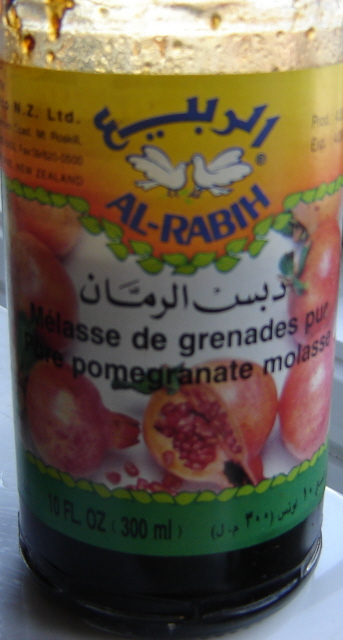
It occurred to me after my Ruby Salad post last week that some of you might be wondering what else to do with the jar of pomegranate molasses you just bought to make the dressing. Or perhaps you were even questioning the wisdom of buying a jar just to make a dressing.


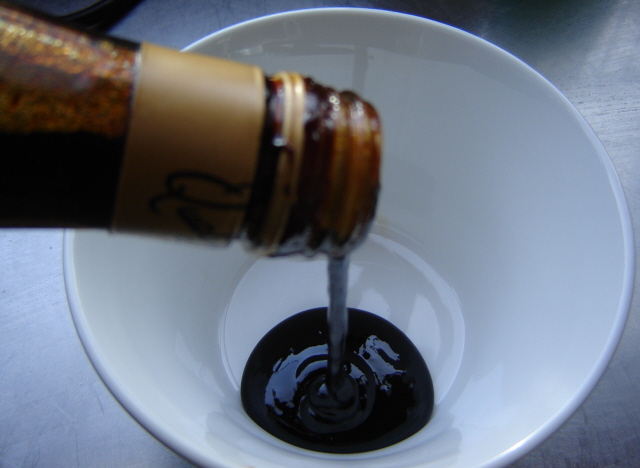
Well, let me tell you that once you have a jar of this in your pantry you will not want to be without it. It is now readily available in Mediterranean and Asian specialty stores, as well as some supermarkets (see Source Guide below). It is relatively inexpensive and keeps almost indefinitely. It is thick and syrupy, as you would expect, dark brown in colour, and its tart/sweet flavour is utterly unique. There is no doubt in my mind that once you have tried this you will be hooked. This is one of those wonderful ingredients that adds a real “wow-factor” to the simplest of dishes.


So, apart from salad dressings, what can you do with it? Here are a few simple suggestions.

Make a refreshing drink by mixing 1 teaspoon of pomegranate molasses with lemon juice and sugar; then add water or soda and adjust to your taste. You could also turn this into a cocktail by adding the alcohol of your choice – vodka and rum both work really well with this.


Use to glaze the skin of a chicken or duck breast before cooking – skin will be crispy and a little sour.


Glaze a rack of lamb before cooking, or use to dip barbecued lamb cutlets.


Make a marinade for salmon fillets by combining: 1/4 cup pomegranate molasses, 1/2 cup orange juice, 1/2 cup dry sherry, 2 tablespoons sugar, and 1 clove of garlic, crushed. Marinate up to 4 hours, remove from marinade and bake in a 160oC oven for 10 minutes. While fish is baking pour marinade into a saucepan, and reduce over low heat to about half. Drizzle reduced pomegranate marinade over fish to serve.


Baked fish parcels – place pieces of firm fleshed fish in centre of piece of tinfoil or parchment paper, drizzle over pomegranate molasses, slivers of garlic, sliced lemon, and finely sliced fennel. Complete with a drizzle of extra virgin olive oil, close up parcel, and bake at 180oC till cooked through.


Make a dressing using pomegranate molasses, extra virgin olive oil, lemon juice and salt and freshly ground black pepper, add chopped flat leaf parsley and mint. Use this dressing over any of the following combinations:

* Char-grilled eggplant and courgette, roasted tomatoes and carrots, black olives and feta cheese

* Roasted pumpkin and mushrooms, pumpkin seeds, baby spinach and grilled haloumi (see Source Guide)

* Mesclun leaves, toasted walnuts, sliced apple, raisins and goats cheese


Drizzle pomegranate molasses over a block of cream cheese and serve with crackers.


I also came across this recipe on Epicurious for Oranges with Pomegranate Molasses and Honey, which I haven’t tried yet but which is high on my list of things to try real soon, especially with oranges being in season right now. I just know that this is going to be great.


If you enjoy any of these suggestions, or maybe have a few of your own, please feel free to leave a comment. I would be really pleased to hear your ideas.


* Lastly, even though I mentioned above that pomegranate molasses are now "relatively" easy to find, here in New Zealand (and especially in Christchurch) some things can still be a little hard to find. So I thought it would be useful to add a Source Guide to this site, showing places where I know you can find any of the more unusual ingredients or products that I use. If you know of other places, please leave me a comment and I will be happy to add them to the Source Guide.


Source Guide:

*Pomegranate Molasses

Available in Christchurch from: Mediterranean Food Warehouse (outlets also in Nelson & Wellington)

Elsewhere available from: Sabato

*Haloumi

Also available in Christchurch from Mediterranean Food Warehouse


Wednesday, July 8, 2009

Ruby Salad Recipe


-->
I would love to start my weekends picking up fresh produce and other treats from some of the excellent farmers markets we now have in Christchurch, but teaching my regular Saturday morning yoga class means that markets are pretty much finished before I’ve closed up the school for the day. If I really get my skates on, however, I can often get to the little organic produce market at Vic’s Café & Bakery. That means I can kill several birds with the same stone … stock up on vegetables, as well as excellent coffee and some of Vic's great bread (I love their ciabatta, and their chocolate chip bagels are to die for).

This week at the market I was able to further indulge my current obsession with lemons, some of which were turned into a tangy lemon sorbet (recipe for this will follow in another post). I also got some beautiful tamarillos, which I’m experimenting with at the moment (keep watching this space), and a big bunch of beetroot.

At this time of year I often like to cook up a big tray of roasted winter vegetables that simply must include beetroot. Half of them get devoured hot, straight out of the oven, with a bowl of good pesto or freshly made hummus to dunk the veges into. The rest get saved for the next day, when they are tossed together with some feta, roasted pumpkin seeds, and a simple vinaigrette made with walnut oil and balsamic vinegar.

For this salad, however, I really wanted the beetroot to be the star of the show. I was inspired by the Ruby Salad which I enjoy every year at Casa Luna in Ubud, Bali. In reality this salad bears little resemblance to the Casa Luna version, other than that they both contain beetroot, but I think the name is perfect for this creation, and it conjures up memories of warmth and sunshine. I’ve mixed the beetroot with pink yams and pink grapefruit. Then came some nuts for texture. If I'd had them in the pantry, my favourite roasted hazelnuts that I get from Piko Wholefoods would have gone in - but walnuts was what I had on hand, and as it turned out the slightly smoky taste they take on after toasting complemented the earthiness of the beetroot really well. Pine nuts would also be fine if that's what you have in the cupboard. And lastly I added a crumbling of blue cheese for some salty tang – I used Kapiti Kikorangi Blue, but any blue cheese, gorgonzola or even feta would work just as well. As for the dressing, the pomegranate molasses adds a robustness and tartness that complements the beetroot perfectly. There is no real substitute for pomegranate molasses, but if you don’t have it I would replace the red wine vinegar with a good balsamic vinegar, and add maple syrup instead of the pomegranate molasses.

Ruby Salad Recipe

4 medium-sized beetroot
8 yams
1 pink grapefruit
handful of toasted walnuts, coarsely chopped
blue cheese
extra virgin olive oil
salt & pepper
Dressing:
3 tblspns extra virgin olive oil
1 tblspn red wine vinegar
1 tspn pomegranate molasses
¼ tspn whole-seed mustard
salt & pepper

Preheat oven to 190oC.

Wash & dry yams, toss with olive oil, salt & pepper, and set aside.

Wash & dry beetroot. You could peel them at this stage, but in my opinion food should be “messed with” as little as possible and peeling seems entirely unnecessary. I also like the extra earthiness in taste & texture that comes through from leaving the skins on. Simply remove the tops and tails, and set aside any good leaves. Cut beetroot into chunks, toss in a little olive oil, good sea salt (if you really want to keep the colour theme going here, some pink Himalayan salt would be a nice touch) and freshly ground black pepper. Place beetroot chunks in the centre of a large piece of tinfoil, fold up into a large parcel, and put into preheated oven for 30 minutes.


After 30 minutes, remove beetroot from oven, open out foil parcel (be careful of the steam), toss yams in amongst the beetroot chunks, reseal parcel, and return to oven for a further 15 minutes. At the end of this time both beetroot & yams should be cooked through but still retain some firmness.

While beetroot is cooking, prepare the grapefruit. Remove skin & all white pith from grapefruit. Then slice down in between the membranes to remove the “fillets” of pink flesh. Work over a bowl to catch any juice, and once all the flesh has been removed squeeze as much juice as you can out of the membrane before discarding.

Remove beetroot and yams from the oven and allow to cool slightly.

In a large bowl gently toss together beetroot chunks, yams (cut in half), and pink grapefruit segments. Drizzle over the reserved grapefruit juice. Sprinkle over toasted walnuts, crumbled blue cheese, and reserved beet leaves (if any).

To make dressing simply combine all ingredients in a jar, shake well, check seasoning to taste, and then pour over assembled salad.

Would serve 4 as a side dish, or 2 as a light meal.

I'm sharing this post at Food on Friday:Beetroot hosted by Carole at Carole's Chatter.

Wednesday, July 1, 2009

Preserved Lemons & Aparigraha

Preserved Lemons

The weather here in Christchurch is beyond bleak at present – day after day after day of cold, grey miserable days. Now in my 16th winter in Christchurch, this feels like the worst so far. It did occur to me that this could be an age thing – that maybe each year older I start to feel the cold a little more – but since people half my age are complaining about the cold as well, I can thankfully avoid putting the chill in my bones down to decrepitude just yet. 

One of the joys of winter, however, is an abundance of citrus fruit – particularly lemons. Not that they grow particularly well here in Christchurch, but at least at this time of year we can get New Zealand grown lemons as opposed to Californian.

I grew up in Auckland, where nearly every home had a backyard lemon tree – a city where no-one ever bought lemons! If you didn’t have a lemon tree yourself, at the very least your neighbour did. Lemons were plentiful year round, and if you asked your neighbour for a lemon, you were usually armed with a large brown paper bag (these days more likely a plastic supermarket bag) and told to go help yourself – it being fully expected that you would take as many as the bag would hold, not just the one lemon that you need for tonight’s gin & tonic.

In my family, the lemons came from a magnificent Meyer lemon tree which stood in the centre of Nana’s backyard, and grapefruit came from our own garden. Cartons full of both would get shipped off down to the South Island to Dad’s sisters, and much of that produce would get turned into Aunty Joan’s exceptional marmalade (perhaps I can wangle the recipe out of her for a later post).
So it was a big shock to me when I moved to Christchurch and discovered that here you had to buy lemons!! And for a long time I just couldn’t do it – I refused to buy lemons, which was difficult because I love them and use them a lot – I mean just about any dish can be enhanced with a spritzing of lemon juice or a sprinkling of grated rind – right?  But for a long time I went without, buying only the occasional “essential” lemon, and really resenting it.

Bowl of Lemons A 
The gorgeous green bowl in this photo is by New Zealand artist Christine Boswijck

I’ve long since given up resisting and buy them freely now, but all of a sudden I feel quite obsessed with them. There’s something about the sight of those bright yellow orbs that fills me with joy on these bleak, grey days, and I feel as though I can’t get enough of them. They offer the promise of warmth and sunshine, and I can’t seem to go shopping without buying a bag full of them. So now I am preserving lemons, see directions below (I love the delicious salty tang and texture that these bring to salads, dressings, tagines, couscous, etc), and and have plans for some jars of lemon curd and lemon sorbet on the weekend.

But the thought occurs to me … is the idea of preserving & storing food in conflict with the yogic principle of aparigraha (non-greed, non-grasping, non-hoarding)? The concept of aparigraha is that we should only take or keep that which is necessary, and that hoarding and holding on to a lot of stuff that we don’t “need” suggests we don’t have the faith that we will be able to provide what we require when the need arises. Certainly back in the times of our hunter/gatherer forbears preserving and storing food during times of plenty was essential to survival during times when food supplies were not available. And it is not that long ago that lack of refrigeration and modern transportation made the preserving of food at the very least practical. But today, when we can get pretty much anything we need, any time, is it just hoarding?

Certainly, I think it is infinitely better to be buying produce while it is in season and plentiful, and preserving it to use when it is not, than to be buying out of season produce that has travelled half way round the world to get to our supermarkets. But, nevertheless, if I’m to adhere strictly to this yogic principle, should I be doing without things that have been preserved, dried, frozen or stored for a time when they are not available, and consuming only what is fresh and available right now? I think the raw foodists would agree, but I don’t think I’m ready to make that leap just yet. I can adhere to buying fresh food in season, and as much as possible locally sourced goods, but I just can’t imagine life without dozens of things in my pantry, such as tinned tomatoes, dried beans & pulses, grains, jams, and of course preserved lemons – most of which are very useful, but I’m not sure I can say how necessary they are. It is easier for me to clear out my wardrobe than the pantry, so at the moment my pantry seems the very antithesis of an “aparigrahic” (probably not a real word) place. I have a long way to go, but …

I’ve made a start today by getting rid of that jar of Red Pepper Relish that has been languishing at the back of the pantry for eight years! An item I purchased even though I don’t like relish, but because it looked so pretty! I’ve replaced that relish with the jar of preserved lemons I made today, which I know I will use – I’m okay with that.

Preserved Lemons Recipe

lemons
coarse sea salt
sterilised preserving jars

Clean lemons well, especially giving them a good scrub to remove any waxy coating if you are using store bought lemons.

Cut a small slice from the stalk end so that you can stand the lemon upright on your chopping board. Then make two vertical cuts, at right angles to each other, down through the lemon to about 1cm from the bottom – take care not to cut all the way through. Your lemon should now be in quarters but still attached at the bottom.

Gently squeeze the lemon open and fill the cuts with as much salt as possible. Then push the cuts back together and holding the salt in as best you can put the lemons into the sterlised jar. Squash as many lemons as you can, pushing them in firmly so that they release some of their juice as you do so, and adding more salt between each layer if you're filling a large jar.

No need to add more juice at this stage, as the lemons will continue to release juice during the pickling process. Seal jar and then store in a cool place, shaking every day (to help dissolve and distribute the salt) for a week.  After a week, now top up the jar with extra lemon juice if necessary, then return to a cool, dark place and leave them alone for a month.

Once opened, store in the fridge.
 
To use: Remove and discard the pulpy flesh; rinse and dry the rind, then use as required.

Sunday, June 28, 2009

You have to begin somewhere

As the title of this post suggests, you have to begin somewhere, but as with any new project or venture it is often so hard to know where exactly to begin. I have a vision of what I think I want to do with this blog, what I want it to say, and what I want it to do for you - and for me - but where and how to start?

Note to self ... practice what you preach! I am reminded that one of the regular messages we give to our students. Whether they be new students wanting to begin a yoga practice, or regular students wanting to begin to develop a new area or their practice, or maybe make some significant changes in their lives, the message is always the same - just start. It doesn't matter where; it doesn't matter how; it doesn't matter how small or humble the beginnings ... just start. The same advice my partner gave me when I talked about my ideas for this blog last night .... just start.

So this is it - the start - my first post. And a very humble one at that - not even a photo to share with you yet.

Through this blog I hope to share with you my love of yoga (and what my practice means to me), my passion for food (and share with you some of my food ethos and recipes), and the unfolding of my efforts to live more consciously and more mindfully.