Showing posts with label curry. Show all posts

Sunday, May 1, 2016

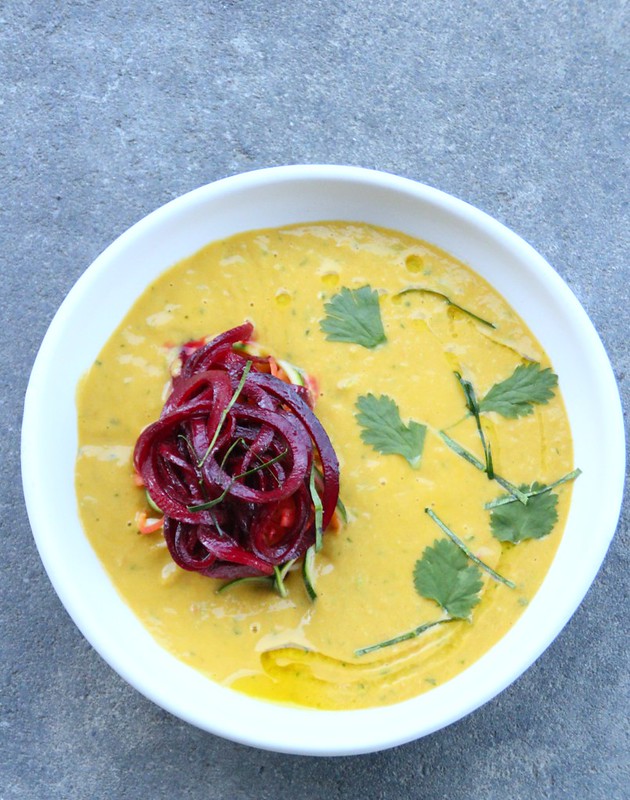
Quick Curry Noodle Soup

Quick Curry Noodle Soup 1

Regular visitors here will know that I like to cook along with my friends at I Heart Cooking Clubs, where each six months we choose a new chef and take an in-depth exploration of their recipes and cooking techniques.  What you won't know, because I'm shamefully guilty of not having posted for the last month, is that we have now moved onto our 14th IHCC chef - Curtis Stone.  Curtis is of Australian origin, pursued a cooking career in London (including working under Marco Pierre White, and, in addition to a number of popular television shows, he now has a well-known restaurant of his own in Beverley Hills, California.

This week at IHCC is actually Potluck Week, which means we actually get to choose any recipe we like from any one of the 14 chefs in the IHCC stable.  However, since I've yet to join in with cooking any of Curtis' dishes, it seemed only fair that I should dip into one of his many culinary tomes.

It was the Quick Curry Noodle Soup from Curtis' book Good Food, Good Life which provided my initial inspiration. Curtis' soup incorporates beautiful prawns and fresh fish in a rich coconut broth with lots of Thai flavours of lemongrass, ginger, coriander, and kaffir lime - delicious!!

However, as I've just spent the last month doing a Raw Food Chef's training course through the Matthew Kenney Culinary Academy (which I can honestly say has been truly amazing, and you can visit this post to find out about my experience and see what we made), I was inspired to see if I could make a raw version of this dish.  Further inspiration also came from a Bahian style soup which we made on the course.
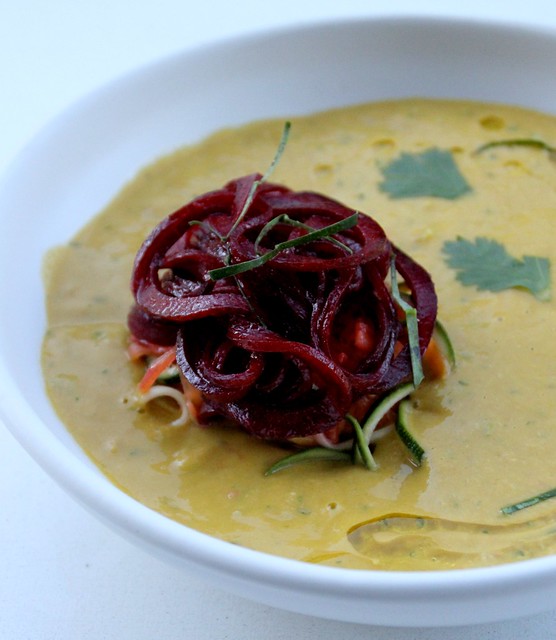
Quick Curry Noodle Soup 3

I went about making my version of this soup by substituting the seafood for vegetable "noodles" - carrots, zucchini and beetroot - and whizzing up my coconut milk and loads of zingy flavourings in the blender instead of in a pot. Obviously, because this is a raw version, it's not a hot soup, but there's actually plenty of heat comes through from the chilli, so it was still plenty comforting even on an autumn evening.  The wild card I guess in my version was the beetroot - not something that you would generally expect to find with these bold Asian flavours, but the sweet yet earthy flavour of the beets actually worked surprisingly well, and there's no doubt that they certainly add some visual impact to the dish.  I would have no hesitation including them again.

You might not have thought about raw food before, but I urge you to try this dish - it just might surprise you.
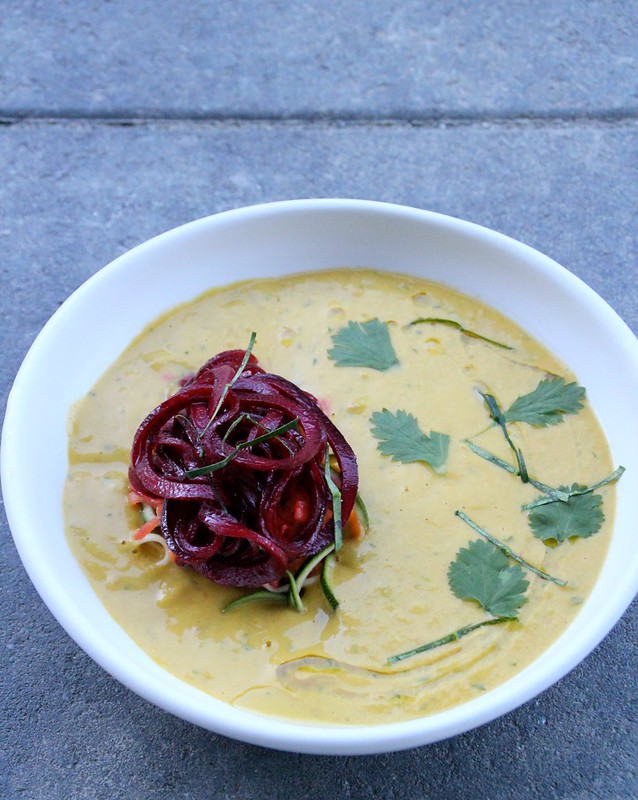
Quick Curry Noodle Soup 2

Quick Curry Noodle Soup Recipe
Inspired by Curtis Stone & Matthew Kenney
Click here for a printable copy of this recipe

coconut milk
1 cup dessicated coconut
2 cups water

vegetables
1/2 medium carrot
1x small zucchini
1/2 medium beetroot
sea salt
2 teaspoons lemon juice

soup
1-1/2 cups coconut milk
1/3 cup carrot juice
5cm (2 in) piece spring onion, white part only, roughly chopped
2 tablespoons fresh coriander, leaves and stems, chopped
1 tablespoon freshly grated ginger
1x small clove garlic, minced
1/2 medium red chilli, remove seeds if you prefer less heat
1x lime, grated zest and juice
1/2 teaspoon salt
1x avocado
1x large tomato, seeds removed and diced

to serve
coriander leaves
kaffir lime leaf, finely shredded
lime cheek

Begin by making the coconut milk - pour the water over the dessicated coconut and leave to stand for at least 10 minutes.  (Go have a cup of coffee, put your feet up, have a snooze - nobody dies!!)  After a suitable rest period, add the coconut and water to a blender, blend thoroughly (really thoroughly), and strain.

Next prepare the vegetables.  You can run the vegetables through a spiraliser to create your noodles, or if you don't have a spiraliser, a vegetable peeler that creates fine juliennes or ribbons will do just fine.  Place the carrot and zucchini noodles in a bowl, sprinkle with a pinch of sea salt and a teaspoon lemon juice, toss well and set aside to soften slightly while you prepare the broth.  Do the same thing with the beetroot noodles, keeping them in a separate bowl from the other vegetables so that the beetroot doesn't turn everything pink.

Now, onto the broth.  Put all of the soup ingredients, except the avocado and tomato into a tall jug or deep bowl. Using an immersion blender, blend everything until smooth.  Add the avocado and blend again, at which point the broth will thicken up.  Lastly, add the tomatoes and blend until smooth.

To serve, arrange a pile of the vegetable noodles in a bowl, and pour the broth around the noodles. Garnish with a few coriander leaves and finely shredded kaffir lime leaf.  Serving a lime cheek on the side would also be a nice addition.

If you would like to get to know Curtis Stone a little better, and to see all the wonderful Potluck dishes my friends have come up with, then do go visit I Heart Cooking Clubs and check out the links. 


I'll also be sharing this post this week at Souper (Soup, Salad & Sammies) Sundays hosted by my lovely friend Deb at Kahakai Kitchen.

Souper Sundays Badge


Monday, June 16, 2014

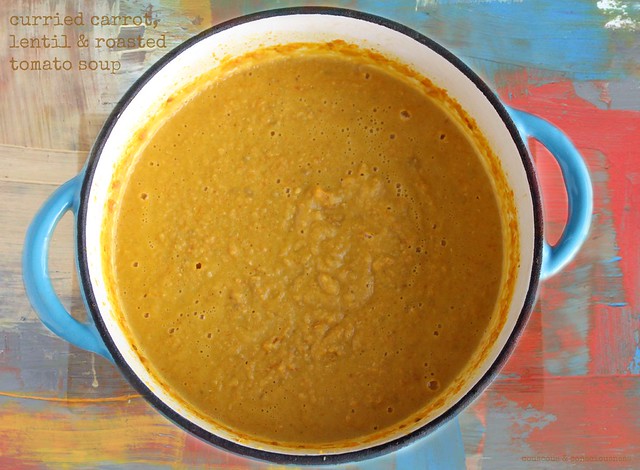
Curried Carrot, Lentil & Roasted Tomato Soup

Curried Carrot, Lentil & Roasted Tomato Soup 1.jpg

I have a kind of love/hate relationship with carrots.  When I was a kid, the only way that carrots ever showed up in our house was boiled (most nights), or worse still mashed up with either parsnip or swede.  I hated it, and many a "you're not leaving this table until you've eaten those carrots" war was waged in our house.  Stews too were the cause of great angst for me, as I would pick all the bits of carrot out, and then the battle would begin again.

When the '80s came around and glazed carrots became highly fashionable, I found them slightly more palatable, but they were still not a "first choice" vegetable for me.  It wasn't until I discovered roasted carrots that I found a way in which I could not just "like" carrots but really love them.  I was a little ambivalent about raw carrots too until the fabulous Marcella Hazan introduced me to a wonderful salad of shredded carrot, lemon zest & juice, flaky sea salt, and extra virgin olive oil - incredibly simple but positively sublime.

For all that I've found a few ways to love carrots, I've never been brave enough to try carrot soup.  I've always been pretty sure that I wouldn't really like it - I couldn't believe that it was going to taste any different to just blitzed up boiled carrots, and I would hate that.  But for weeks now I've been finding myself constantly drawn to Nigel Slater's recipe in Tender, Vol. 1 for "A soup the colour of marigolds".  Yes, it's just carrot soup, but it looks stunning in the photo and the title sounds so magical I keep coming back to it.  Talk about being seduced by a good line!  After my friend and IHCC co-host Deb at Kahakai Kitchen made this soup a couple of weeks ago, I knew it was only a matter of time before I had to try it.

When our I Heart Cooking Club theme of Budget Friendly Dishes came up this week, I knew the moment had arrived to put this soup to the test.  Budget friendly cooking to me is all about using ingredients which are fresh and seasonal, and with a big bag of carrots I'd picked up for $2 sitting in my veggie crisper I didn't think things could get much lighter on the pocket than that.  The original recipe also calls for yellow tomatoes.  These are definitely not in season here right now, and even if you could find them they certainly wouldn't be budget friendly.  I did, however, happen to have some tomatoes in the freezer which I had slow-roasted when they were in season.  Even though I expected these to detract somewhat from the beautiful marigold colour of Nigel's soup, it seemed like they would make a very good and thrifty alternative to the yellow tomatoes.  I subbed in some celery in place of onions, and  I also decided to add some red lentils to make this a little more "wintery" and comforting, some curry powder for a little spiciness instead of the more mellow bay leaves suggested by Nigel, and some coconut milk for a touch of luxury in such a parsimonious meal.

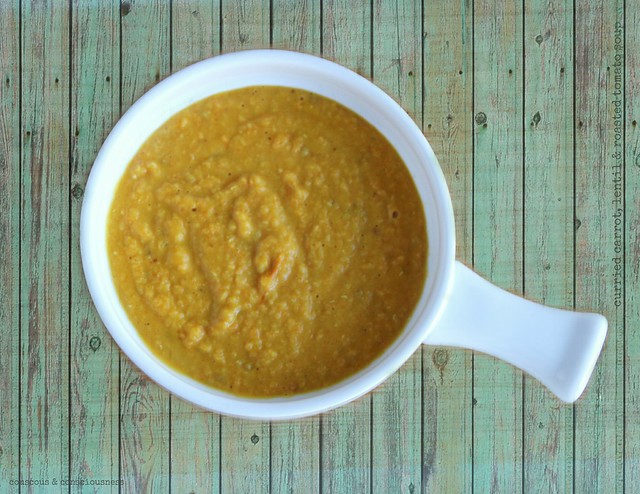
The verdict:  This could not taste less like "just a bunch of boiled up carrots".  My carrot soup phobia is over.  This soup is heavenly ... plenty of sweetness from the carrots, balanced out by the roasted tomatoes, some earthiness and "comfort" from the lentils, sweetness and fragrance from the coconut milk, and a little heat from the curry powder.  I will definitely be making this soup again, and next time I'm going to try replacing the curry powder with a little harissa - I think the flavours would be great with the carrots and tomatoes, and the kick of heat won't go astray either.  Hey, and guess what ...  I also discovered that my roasted red tomatoes didn't detract from the gorgeous colour one little bit, it's still the colour of marigolds.  What do you think?

Curried Coconut, Lentil & Tomato Soup 2.jpg

Curried Carrot, Lentil & Roasted Tomato Soup Recipe
Inspired by recipe by Nigel Slater
from Tender, Vol. I
Click here for a printable copy of this recipe

1 tablespoon olive oil
450g carrots
2x sticks celery
flaky sea salt
450g slow-roasted tomatoes
2 teaspoons curry powder
1 cup red lentils
1 tin coconut milk
4 cups water

Finely chop the carrots & celery - I blitzed them up in the food processor until very finely chopped.  

Heat olive oil in a heavy based pan over medium heat.  Add carrots and celery, sprinkle with a generous pinch of flaky sea salt, and cook (stirring from time to time) until the vegetables have softened and started to release some of their liquid.

Add the tomatoes and curry powder, and continue stirring for a couple of minutes.

Add the lentils, coconut milk, and water.  Stir to combine.  Bring to a boil, then reduce heat, and simmer gently for 30-40 minutes, until the vegetables and lentils are completely soft.   It thickens up a lot as it cooks, so feel free to add more water as necessary.

Use a stick blender to blitz to a puree (or pour into a conventional blender).  Taste and adjust seasoning as necessary.  Serve.

If you would like to get to know Nigel Slater a little better, and to see all the other budget friendly dishes that are on the menu this week, then do go and visit my friends at I Heart Cooking Clubs and check out the links ...


... or check out Tender, Vol. 1 and Nigel's many other great titles available from Amazon USA, Amazon UK, or Fishpond NZ.

I'll also be sharing this post this week at See Ya In the Gumbo hosted by the delightful Michelle at Ms. enPlace, at Souper (Soup, Salad & Sammies) Sundays hosted by my lovely friend Deb at Kahakai Kitchen, at Weekend Cooking hosted by Beth Fish Reads, at Foodie Fridays hosted by Designs by Gollum, and at Cook Your Books hosted by the lovely Joyce at Kitchen Flavours.

See Ya in The Gumbo Badge    Souper Sundays Badge    Weekend Cooking Badge    Foodie Friday Badge    Cook Your Books Badge


Sunday, June 1, 2014

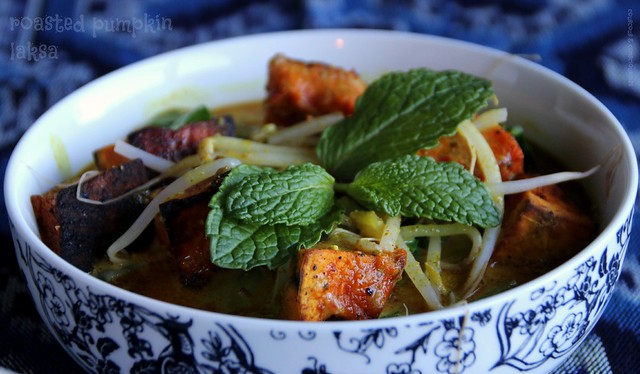
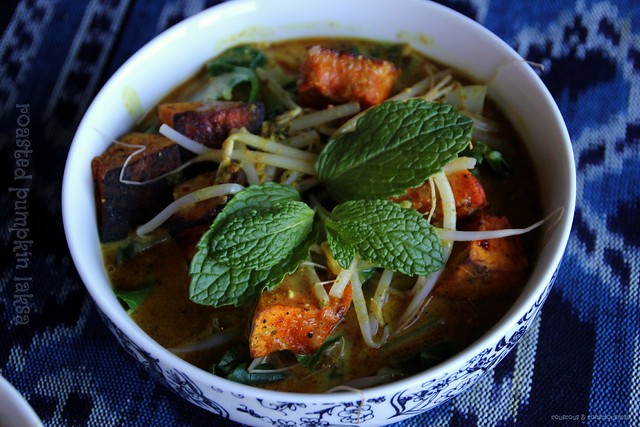
Roasted Pumpkin Laksa

Roasted Pumpkin Laksa 1

This week at I Heart Cooking Clubs we're all about fresh, seasonal vegetables.  Our theme of "Veg Out!" means we get to choose any one of Nigel Slater's veggie laden recipes for the task.  Sounds easy enough, right, until you have a look at just how many such recipes Nigel has in his arsenal and try to narrow down the choice.

Today is the first day of winter here in New Zealand, so I was definitely on the lookout for something warming, and quite possibly "soupy".  When I stumbled across "A new pumpkin laksa for a cold night" in Tender, Vol. I, I knew I'd struck gold.  I'm not personally a huge fan of your run-of-the-mill pumpkin soup - it's ok, I guess, but it just doesn't excite me.  I do, however, love a good laksa, and the idea of combining the aromatic, coconut-rich broth and noodles with the sweet nuttiness of pumpkin really appealed.

Nigel says that, since first making this dish, he has constantly tweaked the recipe, taking things out and putting things in, according to mood and availability of ingredients.  He does caution, however, that this needs "to be done with care;  you don't want too many flavours going on.  Vietnamese soups such as this" (actually to the best of my knowledge a laksa is a Malaysian dish, not Vietnamese, but that's what Nigel calls it and I'm just quoting here) "are traditionally ingredient rich but should never taste confused.  By the same token to simplify it too much would be to lose the soup's generosity and complexity and therefore its point."

He goes on to say "The laksa appears complicated at first but in practice it is far from it.  Once you understand the basics, the recipe falls into place and becomes something you can fiddle with to suit your own taste.  The basic spice paste needs heat (ginger, garlic, tiny bird's eye chillies);  the liquid needs body and sweetness (coconut milk, rich stock);  the finish needs sourness and freshness (lime juice, mint, coriander).  The necessary saltiness comes from nam pla" (fish sauce) "and tamari rather than salt iteself.  These notes in place, you can feel free to include noodles, tomatoes, greens, sweet vegetables or meat as you wish.  What matters is balance."

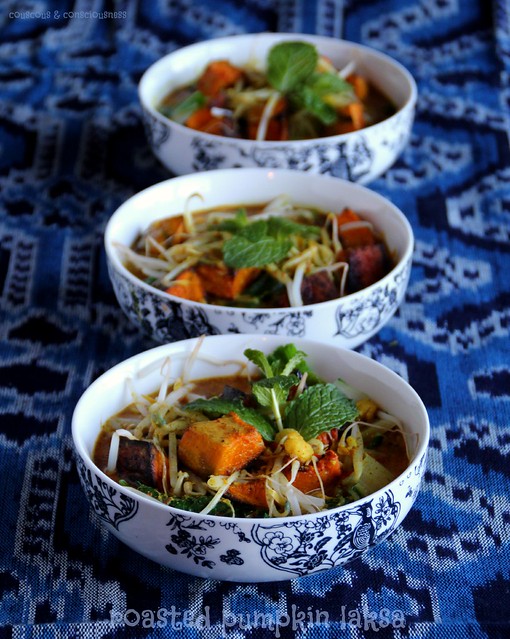
Roasted Pumpkin Laksa 3

I did make quite a few changes to this recipe.  Whilst I am normally one to be stripping recipes back and simplifying them as much as I can, in this case I did up the ante a bit on a number of fronts, which did make the dish a little more complicated (not much), but it was truly worth it.  Firstly, the pumpkin.  Nigel suggests steaming the pumpkin, but I was imagining the pumpkin replacing the fried cubes of tofu you might ordinarily find in a laksa, and decided that tossing it with a little sesame oil and roasting it was the way to go.  I also added a shallot, some whole toasted coriander and cumin seeds, a few macadamia nuts, a couple of kaffir lime leaves, and some ground turmeric, coriander and cumin to the curry paste.  I wanted an extra punch of heat, so added in some red curry paste.  I served this with rice vermicelli, and some blanched bok choy and bean sprouts.  Chunks of cucumber, shredded Chinese cabbage, halved hard-boiled eggs, shredded leftover chicken, cubes of fried tofu, or prawns would all be great options for a few alternative add-ins.

This laksa was perfect for a cold winter evening.  The sweet, soft, nutty pumpkin, silky rice noodles, crispy bok choy and bean sprouts, all bathed in a gorgeously fragrant, coconut-rich broth, was a symphony of flavours and textures, and even though I did a little bit extra for this dish it was hardly arduous work.  I will definitely make this again.

Roasted Pumpkin Laksa 2

Roasted Pumpkin Laksa
Adapted from recipe by Nigel Slater
from Tender, Vol. I
Makes 4 generous servings
Click here for a printable copy of this recipe

350-400g (12-14 oz) pumpkin
olive oil
sesame oil
flaky sea salt & freshly ground black pepper

for laksa paste:
1/2 teaspoon coriander seeds
1/2 teaspoon cumin seeds
3-4 small, hot, red chillies (remove seeds if you want to moderate heat)
1 shallot, peeled & roughly chopped
3x cloves garlic, peeled & roughly chopped
thumb-sized piece of ginger, peeled & roughly chopped
2x stalks of lemongrass, outer leaves discarded & inner stalk roughly chopped
generous bunch of fresh coriander, stems & leaves, roughly chopped
2x kaffir lime leaves, central stem discarded & leaves roughly chopped
small handful of macadamia nuts
1 tablespoon sesame oil

sunflower oil
2 tablespoons red curry paste (I used Asian Home Gourmet brand)

for broth:
sunflower oil
sesame oil
1 teaspoon ground coriander
1 teaspoon ground turmeric
2 teaspoons ground cumin
2-1/2 cups chicken stock
1x can coconut milk
1 tablespoon fish sauce
juice of 1x lime

to finish:
noodles of your choice
shredded bok choy
bean sprouts
fresh coriander, roughly chopped
fresh mint leaves

Preheat oven to 220 degrees C (390 degrees F).

Peel and de-seed pumpkin, and cut into bite-sized chunks.  Put pumpkin pieces into a small bowl.  Add a generous drizzle of olive oil, and cautious drizzle of sesame oil, along with a generous pinch of flaky sea salt and plenty of freshly ground black pepper.  Toss everything together until pumpkin is well coated with oil and seasonings.  Tip pumpkin out onto an oven tray lined with baking paper, and bake in the preheated oven until golden and just tender - this will probably take around 25 minutes.  Remove from oven and keep warm.

To make the laksa paste, begin by toasting the coriander and cumin seeds in a dry pan until fragrant and slightly coloured.  Remove from pan and add to blender or food processor, along with chillies, shallot, garlic, ginger, lemongrass, fresh coriander, lime leaves, macadamia nuts, and sesame oil.  Blitz until you have a rough paste.

Heat a generous slosh of sunflower oil (about a tablespoon) in a large, deep pan set over medium heat.  Add red curry paste to the pan, and cook, stirring constantly, for a few minutes until the paste is fragrant and "burnished" (but not burnt!!).  Remove paste from pan and set aside.

Return pan to the heat with another generous slosh of sunflower oil, and a slightly more restrained slosh of sesame oil.  Add ground coriander, turmeric and cumin to the pan and fry for about 5 minutes, stirring constantly.  Add the laksa paste to the pan, and cook for several more minutes, stirring constantly, until the paste is very fragrant and almost a little "jammy".  Stir in the red curry paste, chicken stock, coconut milk, fish sauce and lime juice.  Bring to the boil, then reduce to a simmer for several minutes.

Meanwhile, prepare noodles according to package instructions, and blanch the bok choy and bean sprouts.

To serve, add noodles to deep bowls.  Top with bok choy, bean sprouts and roasted pumpkin.  Pour over the hot broth, and finish with some fresh coriander and mint leaves.

Serve immediately.

If you would like to get to know Nigel Slater a little better, and to see all the other veggie strong dishes that are on the menu this week, then do go and visit my friends at I Heart Cooking Clubs and check out the links ...


... or check out Tender, Vol. 1 and Nigel's many other great titles available from Amazon USA, Amazon UK, or Fishpond NZ.

I'll also be sharing this post this week at See Ya In the Gumbo hosted by the delightful Michelle at Ms. enPlace, at Souper (Soup, Salad & Sammies) Sundays hosted by my lovely friend Deb at Kahakai Kitchen, at Weekend Cooking hosted by Beth Fish Reads, at Foodie Fridays hosted by Designs by Gollum, and at Cook Your Books hosted by the lovely Joyce at Kitchen Flavours.

See Ya in The Gumbo Badge    Souper Sundays Badge    Weekend Cooking Badge    Foodie Friday Badge    Cook Your Books Badge

And for just a little more sharing "love", I'm sharing this post at Cooking with Herbs, created by the lovely Karen at Lavender & Lovage, and hosted this month by Lancashire Food.

Cooking with Herbs Lavender and Lovage

Sunday, November 18, 2012

Fish Curry (Boatmans Curry)

Boatmans Curry 1

At I Heart Cooking Clubs, our theme this week is "Comforting Curries" - to be even more precise, a curry from the Queen of Indian food, Madhur Jaffrey.

When spring temperatures plummeted yesterday to the extent that merino sweaters had to be dragged out of the mothballs again, and I returned from the market cold and wet (yes, chilly temperatures were accompanied by teeming rain), a curry seemed like the perfect warm-me-up-pick-me-up kind of dinner.

A quick online search and I came up with Madhur Jaffrey's recipe for "Boatmans Curry".  As soon as I noticed that one of the ingredients was tamarind paste (one of my favourite flavours), I knew this was the dish.  I happened to have everything on hand that I needed, barring the fish, so after a quick trip down to the fishmonger I was good to go.

I don't mind a moderate amount of heat to my curries, but the same cannot be said for everyone else in my household.  So, I've adjusted Madhur's recipe quite a bit to really dial down the heat factor.  So much so, I was actually a little worried that I would find it a bit bland for my taste.  As it turned out, there is so much other flavour going on that it totally didn't need the extra heat.  I also made a couple of other little changes to the preparation, firstly because I didn't have fresh coconut, and also mincing my shallots up with the garlic and ginger, rather than keeping the onion separate, just because I prefer it that way.  What follows, is my version of the recipe.  Follow the link above if you want Madhur's original version with full throttle heat.

Boatmans Curry 2

Fish Curry Recipe
Adapted from recipe for Boatman's Curry by Madhur Jaffrey
Makes 3 generous servings
Click here for a printable copy of this recipe

For the spice paste:
1 teaspoon chilli paste
1 tablespoon paprika
3 tablespoons ground coriander
1 teaspoon turmeric
1-1/4 cups long thread coconut
3/4 cup hot water

For the tamarind paste:
2-1/2 tablespoons tamarind paste
1x green chilli, seeds removed
2.5cm (1 inch) piece ginger, peeled & roughly chopped
2x cloves garlic, peeled & quartered
4x shallots, peeled & quartered
1-1/2 teaspoons salt

1 tablespoon oil (neutral flavour)
1/2 cup water
500g firm fleshed white fish, cut into large chunks
(I used trevally)
fresh coriander (cilantro), roughly chopped

Begin with the spice paste.  Put coconut threads into a bowl and pour over the hot water.  Allow to soak for about 30 minutes to soften the coconut.  Then place coconut, and soaking liquid, along with all the other ingredients into a blender, and blitz until you have a smooth paste.  Remove from blender to a small bowl and set aside.

Now on to the tamarind paste.  Put all the ingredients into the blender, and again blitz until you have a smooth paste.

Heat oil in a medium sized, heavy bottomed pan over medium heat.  Add spice paste to the pan, along with the 1/2 cup of water.  Bring to a gentle simmer and cook for a couple of minutes.  Now add the tamarind paste to the pan, stir to combine, and simmer for a further 5 minutes.  Add the fish pieces to the pan, stir, and simmer until the fish is cooked through - about 8 to 10 minutes.  Add a little more water during the cooking process if you find the gravy is too thick.

Serve with plain basmati rice, and sprinkle with freshly chopped coriander.

I also served with with some raita and my recently made apple, plum and peach chutney.

Once we'd finished, I still had quite a bit of the gravy left over.  Don't be tempted to throw that away.  I reheated the leftover gravy today for lunch, adding some hard boiled eggs, for an instant egg curry.  As it turned out, this curry worked perfectly with the eggs, so that would be a great substitution for the fish if you happen to be vegetarian.

If you would like to get to know Madhur a little better, then do go and visit my friends at I Heart Cooking Clubs and see what they've all cooked up ...

IHeartCookingClubsMadhurJaffrey

... or check out Madhur Jaffrey's Indian Cooking and many of Madhur's other great titles available from Amazon USA, Amazon UK or Fishpond NZ.

          Madhur Jaffrey's Indian Cookery

Saturday, October 6, 2012

Prawns in a Dark Sauce

Prawns in a Dark Sauce 2

I'm excited ... very excited.  If you've been following this blog for a while, you know that one of the places I like to play is at I Heart Cooking Clubs.  Each six months a new chef is chosen, who we get to know by cooking and posting their recipes, according to a different theme each week, and this week the group begins a new, 6-month culinary journey with the wonderful Madhur Jaffrey.

So why am I so excited?  Well, first of all, Madhur has long been one of my favourite chef's, and is definitely my favourite of all the chefs the group has cooked with so far (no slight intended against any of our previous chefs).  So there's that.

Secondly, I've had Madhur Jaffrey's Indian Cooking in my cookbook collection for about 25 years, and although I've made several dishes from this book, I haven't used it nearly as much as I would like to.  So there's that too.

And, lastly, I'm excited because Indian food is the food of my childhood.  This is the food that makes me most nostalgic ... the food that sparked my love of being in the kitchen from a young age. Some of my earliest food memories, transport me back to Saturday afternoons in my grandparents' kitchen while they made preparations for Sunday lunch.  Nana would grind spices and roll little balls of lamb, while Grandad grated fresh coconut, for kofta curry.  Grandad would make gulab jamun - rolling balls of "cottage cheese", deep frying them and bathing them in a cardamom and rose water syrup.  Back in those days, many of the spices my grandmother used were not readily available at the corner grocer - there were no supermarkets around in those days - so she used to buy her spices from a big spice merchant down in Auckland's viaduct basin.  The spices were kept in the little brown paper bags they came in, and I used to love hauling a chair over to the cupboard where they were stored, opening the door and breathing in the heady aromas.

Spices

Then Sunday morning would roll around, and after church Nana would pull up her sleeves and begin to make the parantha (Indian flatbreads), as the family began to gather around the table.  Steaming plates of rice and curry would be brought to the table, with big piles of the parantha, jugs of dahl, and long "wands" of cucumber marinating in tall jugs filled with chilled, salty water.  Throughout lunch, background music was provided by the Sunday Request Session on the radio - everyone's favourite was "Silver Threads & Golden Needles".  Mum and her sister would regale us with stories of their own childhood growing up in Calcutta, stories we loved to hear so much that my brother and I would ask for them to be told over and over again.  

Once the last gulab jamun had been devoured, and dishes done, we would retire to the lounge for the Sunday afternoon "old-time" movie on TV.  Once movie time was over afternoon tea would ensue, and after another couple of hours of reminiscing, an early dinner of lunch leftovers and a batch of pholouries (little chickpea fritters, similar to a pakora) would finish off the day. 

Surprisingly though, despite my history with Indian food, I don't cook it as often as you might expect, so I'm really looking forward to the next six months of making Indian dishes a regular fixture at my table.

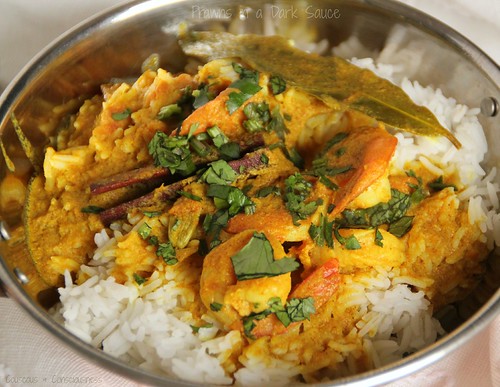
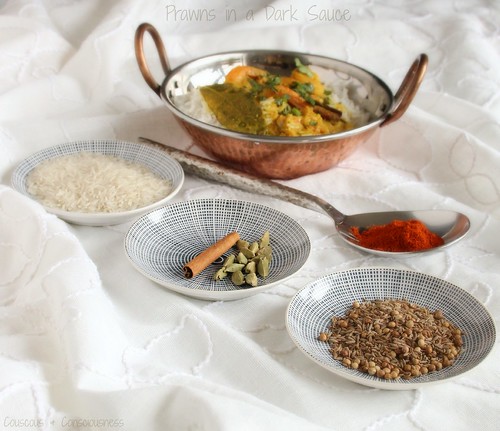
So for our first dish this week - a Potluck theme to "Welcome Madhur" - I headed straight to the bookcase.  I chose Prawns in a Dark Sauce ... what could be more welcoming?!  This dish was very reminiscent of many I ate during my childhood, though we would never have had prawns - more likely it would have been served with fish.  Indeed, you could definitely substitute a firm-fleshed white fish in this dish if you wanted.  In fact, if you wanted to make a vegetarian version of this, you could easily substitute chunks of roasted aubergine, or mushrooms, or even hard-boiled eggs.  With only 1/4 teaspoon of cayenne pepper, there is no significant heat in this recipe, but the subtle layering of spices certainly delivers some warmth and complex flavours.  This is a very quick and easy dish, and would be perfect for a quick, mid-week, after-work dinner.  I served this with plain basmati rice, and a simple tomato, cucumber, and coriander salad.

Prawns in a Dark Sauce 1

Prawns in a Dark Sauce
Adapted, just barely, from recipe in
Serves 3
Click here for a printable copy of this recipe

1/2 onion, peeled & roughly chopped
2.5cm (1 inch) piece ginger, peeled & roughly chopped
5 cloves garlic, peeled
50 ml (1.5 fl oz) water
4 tablespoons sunflower oil
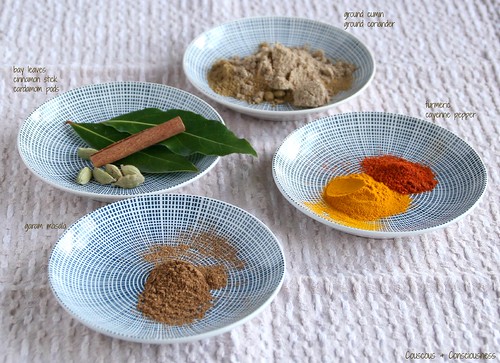
1x small cinnamon stick
6x whole green cardamom pods
2x bay leaves
2 teaspoons ground cumin
1 teaspoon ground coriander
2x medium tomatoes, peeled and finely chopped
5 tablespoons natural yoghurt
1/2 teaspoon ground turmeric
1/4 teaspoon cayenne pepper
275 ml (1/2 pint) water
generous pinch sea salt
300g peeled and deveined prawns
1/4 teaspoon garam masala
fresh coriander, generous handful finely chopped

Put the onion, ginger, garlic and 50 mls of water into blender, and blitz until the mixture becomes a paste.

Heat oil in a medium sized pot over medium-high heat.  Add the cinnamon stick, cardamom pods and bay leaves, and stir for a few seconds.  As soon as they start "spitting", add the onion, garlic and ginger paste to the pan.  Cook for about 5 minutes, stirring regularly, until the paste becomes a light golden colour.

Now add the ground cumin and ground coriander, and fry for about 30 seconds.  Add the chopped tomatoes, and continue cooking until the tomatoes have softened down completely and you have a thick reddish-brown looking paste.  If desired you could pre-prepare the dish up to this stage.

Next add one tablespoon of the yoghurt, and keep cooking, stirring constantly, until the yoghurt is completely incorporated into the sauce.  Continue to the add the rest of the yoghurt, one tablespoon at a time, until it is all fully blended in.  Then add the turmeric and cayenne pepper and stir for a minute.

Now add the 275 mls water, salt, and prawns;  stir and bring to the boil.  Reduce the heat slightly and allow to simmer for about 5 minutes or until you have a nice thick sauce and the prawns are cooked through - take care not to overcook them.  Sprinkle the garam masala over the top and stir in.

Serve immediately garnished with fresh coriander.

(Note:  The cinnamon stick, cardamom pods and bay leaves are not meant to be eaten, so you may prefer to remove them before serving)

If you would like to get to know Madhur a little better, then do go and visit my friends at I Heart Cooking Clubs and see what they've all cooked up ...

IHCC

... or check out Madhur Jaffrey's Indian Cooking and many of Madhur's other great titles available from Amazon USA, Amazon UK or Fishpond NZ.

          Madhur Jaffrey's Indian Cookery


Saturday, February 4, 2012

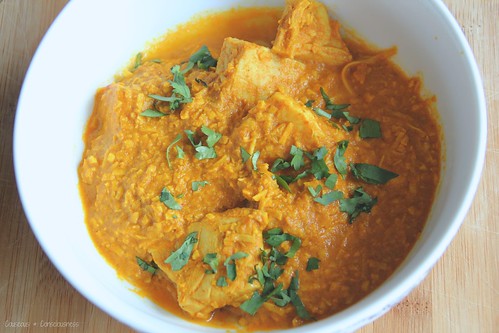
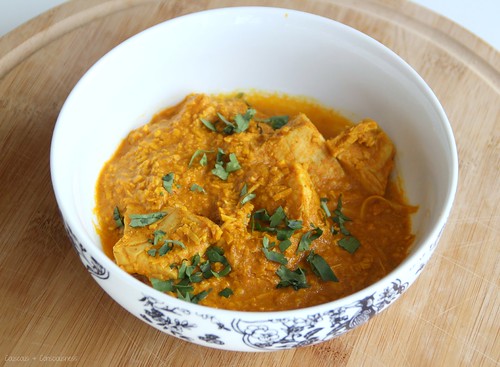
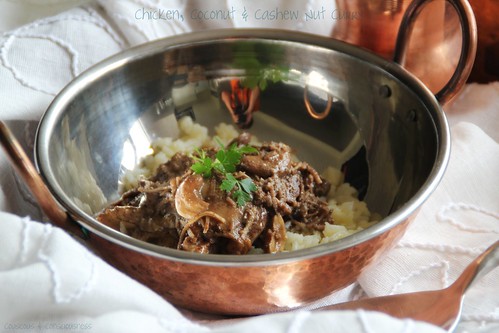
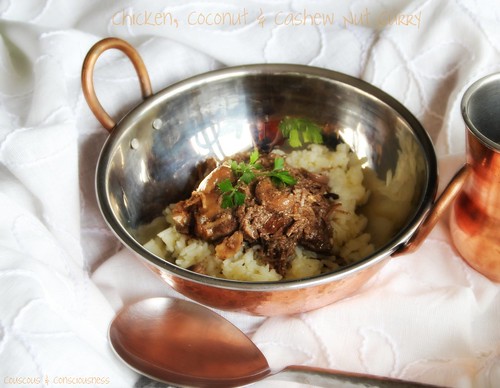
Chicken, Coconut & Cashew Nut Curry

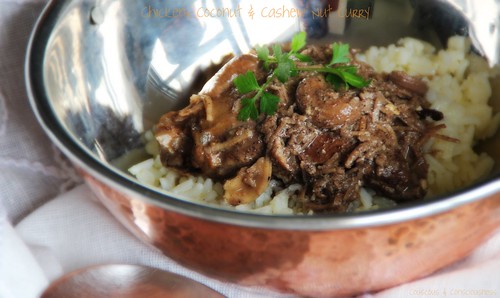
Chicken, Coconut & Cashew Nut Curry 1

It was bound to happen sooner or later - a Tessa Kiros recipe that left me feeling a little disappointed.

Our theme this week at I Heart Cooking Clubs, where we are spending six months cooking the recipes of Tessa Kiros, was "Some Like it Hot ... and Spicy!" - an opportunity to heat things up with a bit of chilli, or introduce some warming spices to a heart-warming dessert or sweet treat.

I toyed with the idea of making Tessa's Cinnamon & Cardamom Buns, a recipe which has been on my radar ever since Kim made them right back in week one, and Natashya made them last week.  But in the end Tessa's recipe for Chicken, Coconut & Cashew Nut Curry, which I'd had bookmarked ever since I bought the book Falling Cloudberries, seemed like just the thing for a quick, flavourful, mid-week dinner.


Falling Cloudberries: A World of Family Recipes

To be honest, I wish I'd stuck with the buns, since both Kim and Natashya raved about them, and I find myself falling a long way short of being able to rave about this recipe.  Now don't get me wrong - it wasn't terrible or objectionable - but when you are used to eating and making a lot of Indian food, as I am, it just fell rather short.  Despite the variety of spices in here, the flavours were somehow not fully rounded out and felt a little unbalanced, and the gravy failed to thicken and emulsify as it should have.

I think, however, the recipe is not beyond redemption.  I would make this again, but there are a number of modifications that I would make which I think would improve it considerably.  Below I have recorded the recipe from the book, as that is what I made, and then at the end I have included my notes for what I would do to improve this.  I'm going to make my improved version next week, so I'll be sure to let you know how that goes.

Chicken, Coconut & Cashew Nut Curry 2

Don't you love the way I managed to capture my own reflection in the bowl - try cloning that out!!

Chicken, Coconut & Cashew Nut Curry
Recipe by Tessa Kiros from
Serves 3-4

1 teaspoon ground coriander
1 teaspoon ground cumin
pinch freshly grated nutmeg
1/2 teaspoon ground cardamom
4 cloves
1 bay leaf
1 heaped tablespoon garam masala
pinch freshly ground black pepper
3 tablespoons vegetable oil
1.25 kg (2lb 12oz) chicken thighs, skinned, boned & flesh diced
(use bone-in thighs for better flavour)
2 onions, finely diced
salt
45g (1-1/2 oz) dessicated coconut
70g (2-1/2 oz) roasted, unsalted cashews
1 cup plain yoghurt

Dry roast the coriander, cumin, nutmeg, cardamom, cloves, bay leaf and garam masala and black pepper in a non-stick pan set over high heat.  Stir-fry until fragrant - just a couple of minutes, then remove from the pan and set aside.

Heat the oil in a large saucepan, and brown the chicken and onions (you may have to do this in batches).  Add the spices, stirring until fragrant, and making sure all the chicken and onions are well coated with the spice mix.  Season generously with the salt.  Add the coconut and 2 cups water, bring to the boil.

Reduce the heat, cover the pan, and simmer for about 30 minutes, stirring from time to time.  Cut the cashew nuts in half, add to the pan and cook for a further 10 minutes.  (Tessa suggests adding more water, if it looks as though it needs it - I think that's unlikely, if anything I found it too watery)

Lastly, stir in the yoghurt.  Simmer for another minute or two without allowing it to come to a boil.  Serve with steamed, buttered, basmati rice.

My recommended changes:
  1. Replace ground spices with whole spices
  2. I would suggest replacing the nutmeg with a cinnamon stick, and substituting the ground pepper with half a dozen dried red chillies.
  3. Cut the onion back to just one, but add a dozen garlic cloves and a knob of ginger, to round out the flavour a bit more.
  4. Increase the amount of coconut - probably about double, and increase the amount of cashew nuts - again probably at least double.
  5. Dry roast the wholes spices, along with the coconut, ginger and garlic over low heat for about 5 minutes, and then add about a third of the cashews and the onion, and continue to roast for maybe another 10-15 minutes.  Allow to cool completely, and then grind up in a blender with some water until you have a smooth, fine paste.  This should extract maximum flavour and help to get a thick, emulsified gravy.
  6. Then heat oil in a large pot, and fry this spice paste for around 10 minutes, before seasoning with salt, add the chicken, and fry for a few minutes making sure chicken is well coated with spice mixture.
  7. Add water, and simmer for about 10 minutes before adding the rest of the cashew nuts, and continue simmering until the chicken is cooked through.
  8. I would leave the yoghurt out, but maybe add some lemon juice and grated lemon zest to the rice.
As I mentioned earlier, I'm going to try out these changes next week, so I'll let you know how it works out, but I feel pretty confident it will deliver I better balanced flavour, and a good, thick gravy.

Chicken, Coconut & Cashew Nut Curry 3

If you would like to get to know Tessa a little better, then do go and visit my friends at I Heart Cooking Clubs and see what they've all cooked up ...

IHCC Tessa Kiros Button

... or check out Falling Cloudberries and many of Tessa's other great titles available from Amazon or Fishpond NZ.


CookbookSundays

I'm also sharing this at Cookbook Sundays, where my friends are delving into their cookbook collections and sharing some of their recipes.  Do stop by to see what they're cooking - you might even feel inspired to link up a recipe from one of your own cookbooks.

Tuesday, January 4, 2011

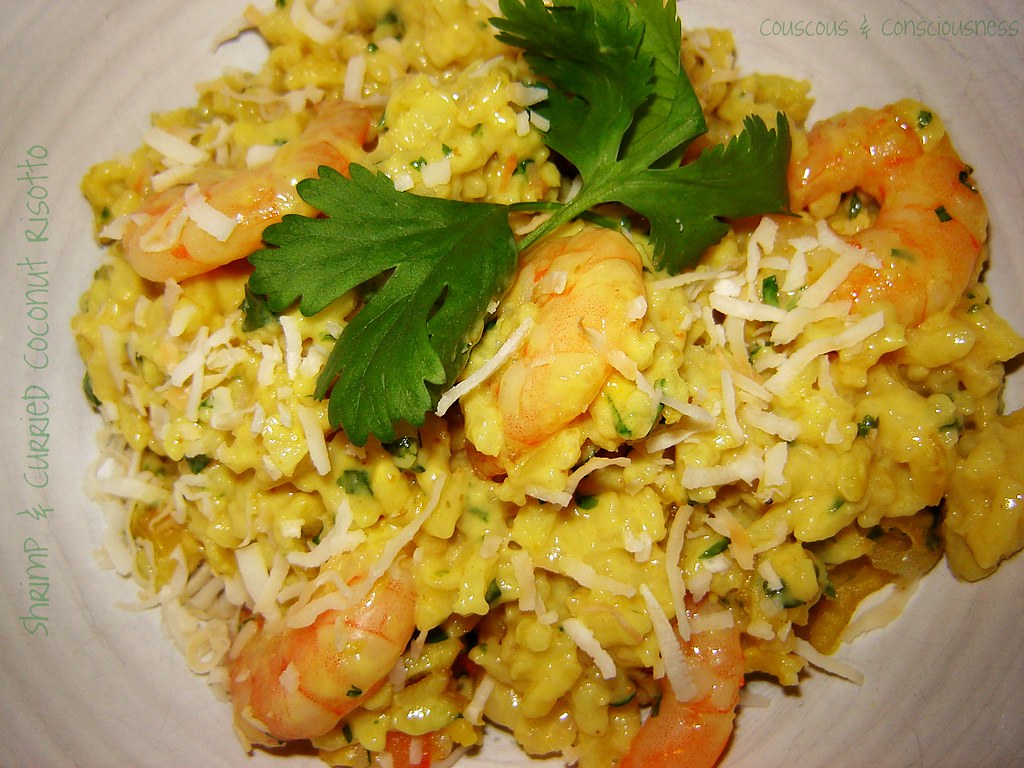
Shrimp & Curried Coconut Risotto for Magazine Mondays

Shrimp & Curried Coconut Risotto

You might recall that a couple of months back I decided it was time to try and whittle down the embarrassingly large pile of food magazines I have lying around the place.  In order to do that I set myself the challenge of cooking something out of the magazine pile at least once a week.  Well I'm pleased to say that I've been doing just that, even though I haven't always been able to post the outcomes.  I also can't really say that I've made much of a dent in the pile, as some of these magazines are so good that I've been stuck in the same one for a month!  But, never mind, at least I'm using them, and I've even finally managed to discard one or two.

As you may have noticed, when I have managed to actually get one of these magazine gems posted, I've joined in with the Magazine Mondays group which is usually hosted by the lovely Ivonne at Cream Puffs in Venice.  Since, Ivonne is a little busy this week I'm honoured to be hosting on her behalf this week.

My contribution this week is a Shrimp & Curried Coconut Risotto, which I adapted from a recipe for Crab & Coconut Risotto which appeared in the December/January 2004-2005 issue of Delicious magazine.  I made a few minor changes to the recipe, firstly using shrimp instead of crabmeat (which is not readily available here), secondly replacing lemongrass with freshly grated lemon zest, and lastly adjusting quantities because I didn't have four people to feed.  You can see the original version of the recipe by following the link above, or my adaptation at the end of this post.

Other contributions to Magazine Mondays this week came from:


Shrimp & Curried Coconut Risotto Recipe
Serves 2
Click here for a printable copy of this recipe

1 tablespoon olive oil
2 tablespoons butter
1 shallot, finely chopped
1 clove garlic, minced
grated zest of 1/2 a lemon
1 teaspoon medium curry powder
3 large handfuls of arborio rice (1 handful per person & 1 for the pot)
4 cups fish or chicken stock, hot
250g fresh shrimp, peeled & uncooked
3/4 cup coconut cream
generous handful chopped coriander
toasted shaved coconut to serve (optional, also see note at end)

Heat the oil and half the butter in a large frying pan, set over medium heat.  Add the shallot and cook until softened, approximately 2-3 minutes.  Add the garlic and grated lemon zest, cook for another minute, then add the curry powder and rice.

Stir until the rice is well coated with everything, then add a ladleful of stock and continue stirring until all the liquid is absorbed.  Then continue in the same way, adding the stock one ladleful at a time, and each time stirring until the liquid is absorbed before adding the next spoonful.  You want to continue doing this until the rice has begun to release its starches and becomes "creamy", but still has a little bite left to it.  When you feel as though the rice is almost done, and you feel as though you are probably only going to add one more ladleful of stock add the shrimp to the rice at the same time.  By the time the rice has absorbed that last batch of stock the shrimp will be almost cooked and will finish off cooking in the final resting time.

Now remove the pan from the heat, stir in the rest of the butter and the coconut cream, cover and allow to rest for 5 minutes.

Stir the coriander into the risotto and serve.  Garnish with a little extra coriander and the toasted coconut shavings if using.  (Note I used toasted shredded coconut, and I have to say that even though I love toasted coconut, I didn't like the texture of the "crispy" coconut with the soft, unctuousness of the rice - it just seemed to be too much of a contrast, rather like coming across toenail clippings in your dinner!  Maybe if I had fresh coconut which I was able to shave and then toast it might have been better.  Either way - you choose)

One more ingredient that would really finish this dish off nicely - a tropical island paradise in which to eat it!

Magazine Mondays Badge

While you're here, check out my new event "Make it with ..... Mondays" - this week we're cooking with saffron and I'd love you to join in.  


I'm also giving away a free copy of Mark Bittman's How to Cook Everything iPhone application (also works on iPod Touch and iPad) - full details here.  There are lots of opportunities to win, and this application really is brilliant, so do go and check it out.  All comments left on this post automatically get an entry to win.