If you're one of my regular visitors, you will know that my absolute cooking hero is the highly inspirational Yotam Ottolenghi, and one of my favourite cookbooks is "Jerusalem: A Cookbook". Good thing then that this week is Potluck week at I Heart Cooking Clubs, which means that we can cook any recipe we like from any one of our ten IHCC chefs, and for me that means checking back in with Ottolenghi. It also means reconnecting with my friends in the Tasting Jerusalem group, where our special ingredient this month is harissa.
Now, I'm not going to tell you all about harissa here or tell you how to make it - I've done all that before and you can read all about it here. I am however going to seriously recommend you do have a go at making some though, whether you use my recipe or Ottolenghi's (which is on page 301 of Jerusalem if you happen to have it). Yes, store bought is fine, but seriously a very small investment in ingredients, effort and time will yield a substantial quantity. It freezes really well, and once you've used it you will always want to have some on hand.
Wondering where or how you might use it? Then check out some of these dishes in which I've used harissa for a little inspiration ...
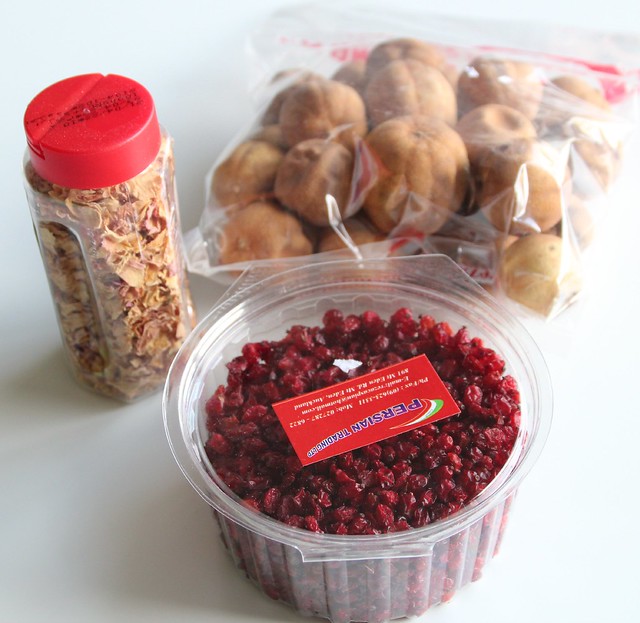
Now before I move on to telling you about this dish, I want to talk a little bit about a few unusual ingredients, and some great new finds. This is really more for the benefit of my Kiwi peeps, so everyone else please feel free to skip the next paragraph or so. Of course, those of you who live in the main centres of Auckland, Wellington and Christchurch are pretty well catered for when it comes to trying to track down unusual ingredients. In fact, just yesterday, on a flying visit to Auckland, I discovered the Persian Trading Co on Mt Eden Road, where I found dried Persian limes, barberries, and dried rose petals, ingredients I had been trying to find for a long time. So, if you happen to live nearby, this little Aladdin's Cave of wonderful ingredients is well worth a visit.
If, however, you happen to live in the provinces, as I do, and if your tastes tend to run to the exotic, as mine do, then sourcing more unusual ingredients can be challenging. We usually have to turn to online resources and I recently discovered a great online supplier called Global Foods Direct. They have a fantastic selection of products (including my beloved kosher salt) that I can't get where I live, their prices are reasonable, and they were a pleasure to deal with. They will definitely be getting a lot more orders from me!
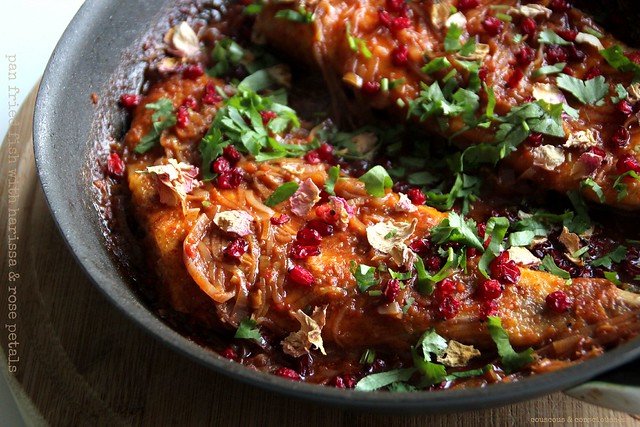
Now back to the dish. In his introduction to this recipe, Ottolenghi says, "This dish originates from Bizerte, the northernmost city in Africa. It is sweet and spicy and beautifully aromatic." He's not wrong about that. While this is cooking your kitchen will smell amazing, a world away from the usual kind of 'fishy" cooking smells you might encounter. Ottolenghi also suggests that this dish can be served warm or at room temperature. By virtue of the fact that dinner in my house is presently made in the middle of the afternoon in order to capture an even half way decent photo of it (I know you can all relate), mine was indeed room temperature. I don't think it suffered any for that though, in fact I think it probably benefited from the opportunity for all the flavours to develop and mingle in the meantime.
This dish offers an intriguing combination of flavours, which you might not normally think to put with fish. There is of course the obvious kick of heat from the harissa, some warming spices by way of some cinnamon and cumin, acidity from vinegar balanced out with sweetness from some honey, sharp, tangy bursts of flavour from barberries (which I used in place of currants), and the exotic fragrance of rose water and rose petals.
This would be a great dish to serve for company - it's quick and simple to prepare, and yet a combination of unusual ingredients and visual appeal will make it a stand-out dish.
My changes to the recipe were minimal - just subbing in barberries for currants as I already mentioned, replacing onions with leek (as that is generally my allium of choice), increased the amount of harissa a bit, and just adjusted a few other quantities to suit. This would serve two people as a substantial main course, with some rice or couscous and a simple spinach salad, or four as a lighter meal.
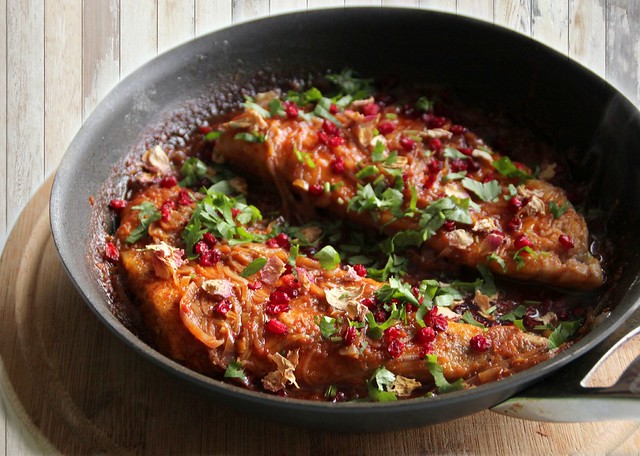
Pan Fried Fish with Harissa & Rose Petals Recipe
Adapted (slightly) from recipe by Yotam Ottolenghi & Sami Tamimi
from Jerusalem: A Cookbook
Serves 2 to 4
Click here for a printable copy of this recipe
400g (14 oz) firm-fleshed, white fish (I used snapper) 2 tablespoons harissa 1 heaped teaspoon ground cumin pinch of flaky sea salt
2 tablespoons olive oil plain flour 1 leek, cut in half lengthwise, then thinly sliced crosswise 2 tablespoons harissa 1/3 cup red wine vinegar 1 teaspoon ground cinnamon
flaky sea salt & freshly ground black pepper 3/4 cup water 1-1/2 tablespoons honey rosewater (between 1 teaspoon & 1 tablespoon depending on your taste) generous handful of barberries (or currants) large handful of fresh coriander, roughly chopped 1 to 2 teaspoons of dried rose petals
Begin by marinating the fish. Cut the fish into serving size portions. In a small bowl, mix together the first measure of harissa, cumin and flaky sea salt, to make a paste, and rub it all over the fish, making sure it's well coated. Set aside to marinate for approximately 2 hours.
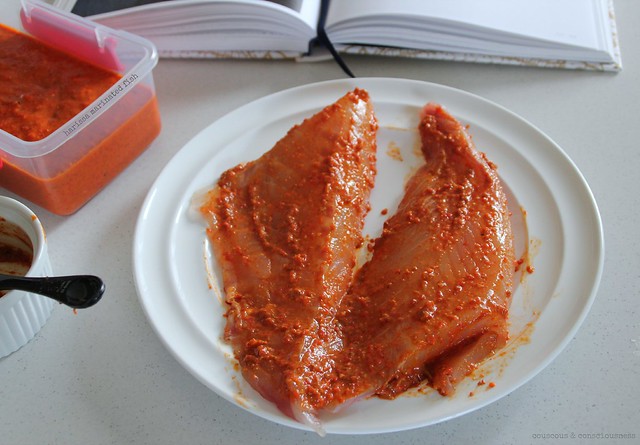
Set a large, non-stick frying pan over medium heat, and add olive oil to the pan. While the oil is heating dust the fish liberally, both sides, with flour and shake off the excess. Add the fish to the hot pan (working in batches if necessary), and cook the fish until golden and not quite cooked through - about 2 minutes on each side. Remove fish from the pan, retaining the oil in the pan, and set aside.
Add the sliced leeks to the pan, and saute gently, stirring from time to time, until they are completely softened - about 5 minutes.
Add the second measure of harissa to the pan, along with the vinegar, cinnamon, a generous pinch of flaky sea salt and plenty of ground black pepper. Add the water, stir to combine everything well, reduce the heat and simmer gently until you have a fairly thick sauce - about 10 minutes.
Add the honey, rosewater and barberries to the pan and simmer for another minute or two. Taste and adjust seasoning to your liking.
Return the fish to the pan, spooning some of the sauce over the top, and simmer gently for a few minutes until the fish is warmed through - add a little more water if your sauce has become too thick.
Remove from heat and sprinkle over the coriander and rose petals. Serve with plain rice or couscous.
If you would like to get to know Yotam Ottolenghi a little better, then do go and visit my friends at I Heart Cooking Clubs and see what they've all cooked up ...

Have a look also at what my "Tasting Jerusalem" friends have been doing - you'll find plenty of other great uses for the harissa you now have in your spice cupboard, along with other interesting ingredients as well. (“Tasting Jerusalem is a virtual cooking community exploring the
vibrant flavors and cuisine of the Middle East through the lens of “Jerusalem: A Cookbook” by Ottolenghi and Tamimi published by Ten Speed Press. You can follow along and cook with us by subscribing to omgyummy.com, following the hashtag #TastingJrslm on Twitter and Instagram, liking our Facebook page or joining our Google+ Community and finally checking out all of our groups’ dishes on Pinterest.”)
When it comes to drinks, be they hot or cold, alcoholic or not, I'm pretty much a straight-up kind of a girl. As far as hot beverages go, I'll drink coffee (either a flat white or a short black, depending on my mood at the time), green tea, or some kind of fruit or herbal infusion. When it comes to a non-alcoholic, cold beverage, tap water is my tipple of choice - fruit juices and sodas generally don't appeal. And in the alcohol department, I would normally opt for a glass of wine, a gin & tonic, or a blizzardly cold beer on a hot day. Cocktails don't particularly interest me, though I can on occasion be tempted by a margarita or a martini.
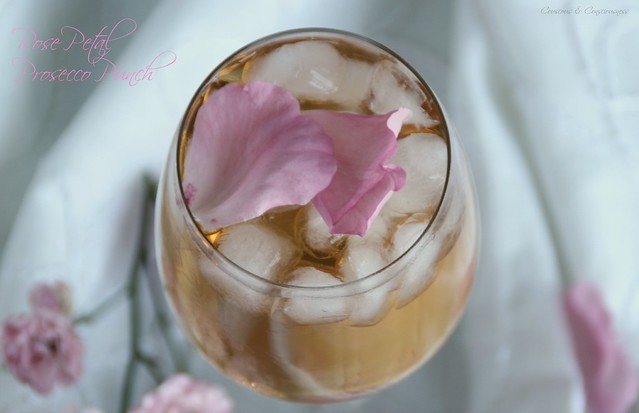
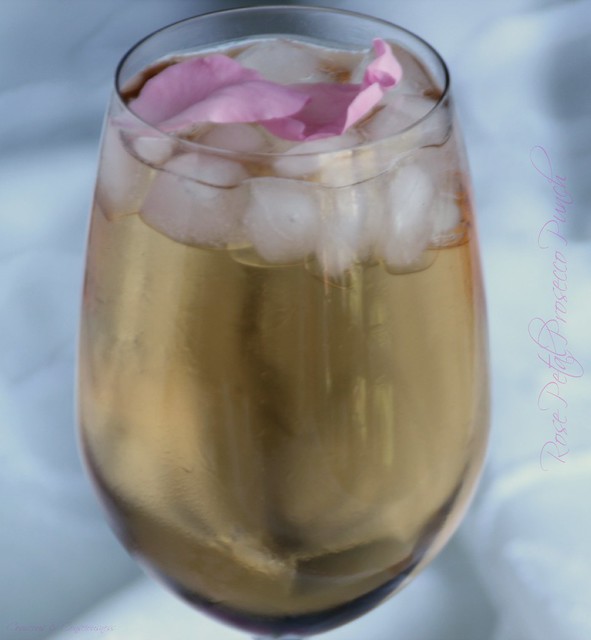
Why am I telling you this? Well, this week at I Heart Cooking Clubs, our theme is "Raise Your Glass", sharing and posting the Donna Hay beverage of our choice. Whilst I know that there are many of you out there who are always looking to try out a new beverage or tipple, I have to admit that in any new cookbook the drinks section is usually the one I skip right over. So I really agonised this week over what to share with you, but with romance in the air this week and Valentines Day just passed, this pretty Rose Petal & Prosesso Punch from the Donna Hay 10th Birthday Collector's Edition magazine seemed like a natural choice. This was refreshing & lovely and would be perfect for a summer celebration.
Rose Petal & Prosecco Punch Recipe
Adapted from recipe by Donna Hay
1/2 cup sugar
1/2 cup water
1/4 cup rosewater
1/2 cup gin
2 cups prosecco (or other sparkling wine)
2 cups soda water
To serve:
ice cubes
pink rose petals (make sure you use spray-free roses)
Put sugar, water and rosewater into a small saucepan. Set over low heat and stir constantly until sugar has dissolved. Increase heat, bring to a boil, and continue to boil for about 5 minutes until slightly thickened and syrupy. Remove from heat and set aside to cool completely.
Put plenty of ice into a large jug. Add the rosewater syrup, gin, prosecco and soda water. Stir to combine, and top with the rose petals.
If you would like to get to know Donna Hay a little better, and to see all the fabulous dishes my friends have come up with, then do go visit I Heart Cooking Clubs and check out the links.
I will also be submitting this post to Sweet New Zealand. Inspired by Alessandra Zecchini, and hosted this month by Frances at Bake Club, Sweet New Zealand is an event for all Kiwi bloggers (whether living at home or abroad), or all foreign bloggers living in New Zealand, to link up their sweet treats.
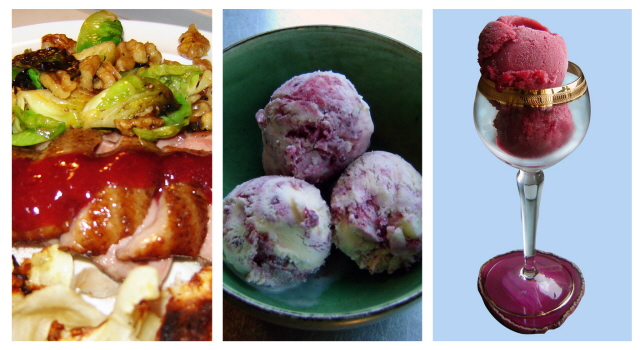
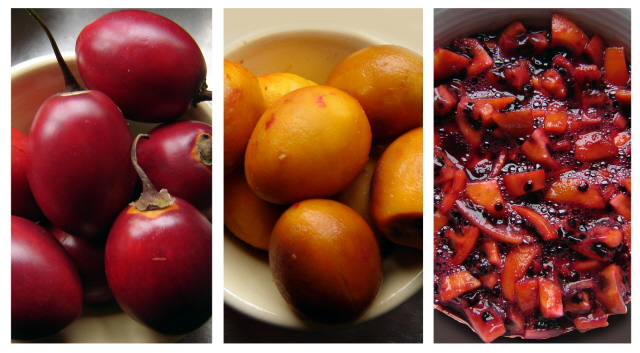
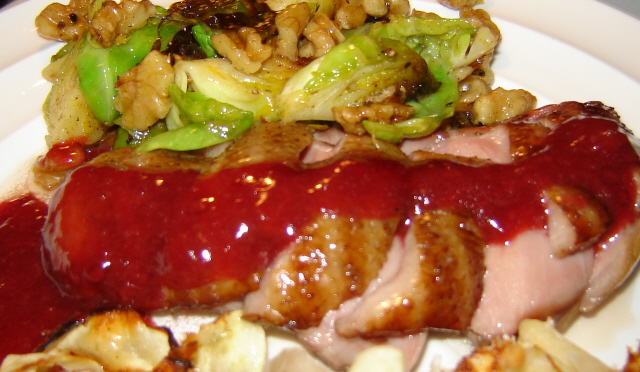
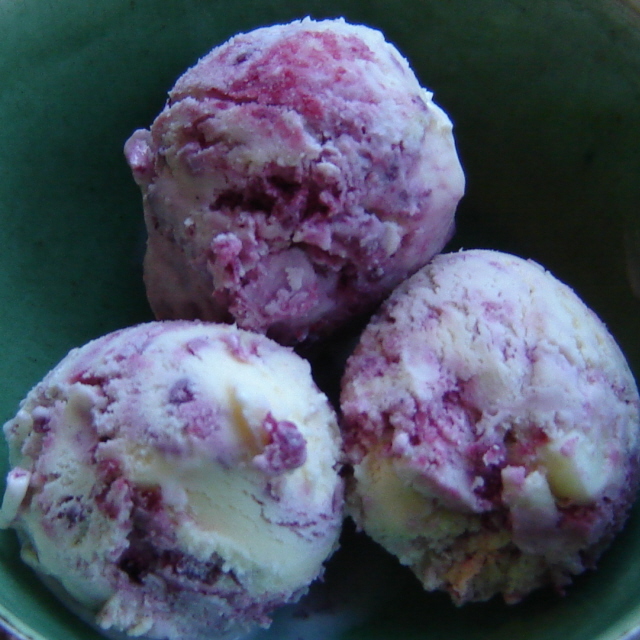
I mentioned a couple of weeks ago that I had been enjoying the abundance of fresh tamarillos right now, and experimenting in the kitchen with them. My brain is still whirring with all sorts of possibilities to trial, but if I waited until I had exhausted all of those before posting, tamarillo season would be over before you got to try any of them. So here are three recipes I have made, and loved every bite of – a Spicy Tamarillo Sauce with Smoked Duck Breast, a Tamarillo Sorbet, and a White Chocolate, Tamarillo & Rose Water Ice Cream. I hope you will try them and enjoy them too. I would also love to hear your comments if you have a favourite recipe using tamarillos.
For all of these recipes you need to begin by blanching, peeling and chopping the tamarillos. Make a small cut in the skin of each tamarillo, drop into a bowl of hot water for about 1 minute, then remove. The skin should now slide off easily – if not, return to the hot water for a minute more. Once peeled, you are ready to cut the tamarillos into small pieces - I cut each one into quarters, then each quarter into four slices.
Blanch and peel the tamarillos according to the earlier instructions. Slice the tamarillos and place in a small saucepan, along with the spices, sugar, maple syrup, and water. Bring up to the boil, then reduce to a simmer for about 10 minutes or until the fruit is soft. Cover and set aside to cool. Remove the spices, puree using an immersion blender or food processor, and reheat before serving. This can be made several hours or even a couple of days ahead of time.
Heat a skillet over high heat, really no oil required as a fair amount of fat will render out of the duck breast. Score the skin of the duck breasts, and once pan is hot, slide in the duck breasts, skin side down. Cook until the skin is crispy, and then turn over for a couple of minutes more. This will really not take much time at all – since the duck has already been smoked, you are not trying to cook it, simply to crisp up the skin and warm it through.
Serve sliced, with the warmed tamarillo sauce poured over the top.
I also served this with some sautéed brussel sprouts with walnuts, and crispy parmesan parsnips (cut parsnips into wafer thin slices, using a peeler, toss with egg white and parmesan cheese, spread out on a baking sheet, and cook in a hot oven until brown and crisp – about 10-15 minutes).
This sauce also works well with roast duck or venison.
White Chocolate, Tamarillo & Rose Water Ice Cream Recipe
Click here for a printable copy of the complete recipe
Vegetarian, gluten-free
Makes about 1.5 litres
This begins with a good vanilla ice cream base, which I adapted from David Lebovitz’s recipe for vanilla ice cream (you can find his original recipe here) - this is simplicity itself to make, and the end result is rich, creamy and fragrant. Of course, like all things simple, the end result is only as good as the quality of ingredients you use – so do use free range eggs, organic milk and cream if you can get it, and good, fresh vanilla beans (look for ones that are still pliable, not stiff and hard). A tamarillo rose water pulp and chunks of white chocolate are then swirled through the churned ice cream.
Recipe
100g good quality white chocolate, chopped
6 ripe tamarillos (preferably organic)
1½ tablespoons sugar
45ml hot water
1½ teaspoons rose water (refer Source Guide) (optional)
Blanch, peel and chop tamarillos according to earlier instructions. Put all of the chopped fruit into a non-metallic bowl and combine with the remaining ingredients. Cover bowl with cling film and set in the fridge to marinate for at least 24 hours. Don’t be concerned if it seems as though the rose water is very over-powering at this stage. It will completely mellow out by the time it has finished its marinating process, at which stage there will be almost no discernable flavour of the rose water. “Why bother then?” you may wonder. Well, somehow, even though you can’t detect the specific taste of rose water, it seems to really accentuate the floral, slightly perfumed notes of the tamarillos’ flavour.
1 teaspoon pure vanilla extract (refer Source Guide)
Combine milk, salt, and sugar in a small saucepan and gently heat. Split the vanilla bean lengthwise, scrape out the seeds, and add the seeds and pod to the milk as its heating. Remove pan from the heat, cover, and leave for about one hour to allow the flavour to infuse.
Next strain the cream into a 2 litre bowl, and then stand that bowl in an ice bath.
Lightly whisk the egg yolks in a separate bowl.
Reheat the milk, and then slowly pour the warmed milk into the egg yolks, whisking constantly.
Return the warmed egg yolks and milk to the saucepan. Then cook over a low heat, stirring constantly, until the custard is thick enough to coat the back of a spoon or spatula.
Strain the custard into the cream, which is standing over its water bath, and keep stirring until the custard is cool. Stir in the vanilla extract, and return the vanilla bean (which was strained out earlier) to the custard.
Completely cover the surface of the custard with a layer of cling fling, and then refrigerate for at least 8 hours, or preferably overnight.
Remove the vanilla bean from the chilled custard, and then churn in your ice cream maker according to the manufacturer's instructions.
While the custard is churning – give the cold, marinated tamarillos a quick blitz with an immersion blender or food processor. I gave this really just a couple of seconds as I wanted to keep plenty of texture rather than ending up with a puree.
Once the ice cream has finished churning, remove from machine. Fold in the white chocolate, and then swirl the tamarillo mixture through the ice cream to get a “ripple” effect. Serve immediately or freeze about 4 hours to firm up a bit more.
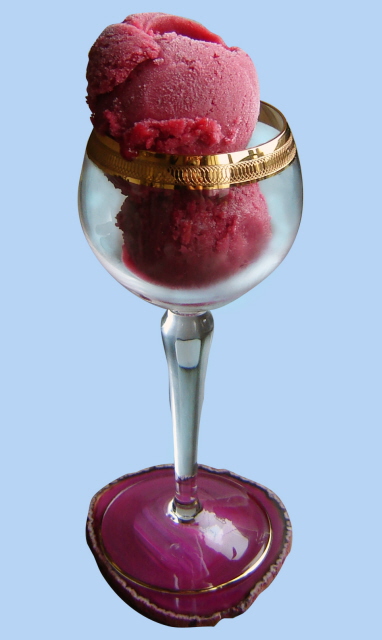
This recipe begins with a tamarillo rose water pulp, just as in the ice cream recipe. The resulting sorbet is deliciously tart and refreshing, and the colour is such a glorious shade of pink it would bring even Nigella to her knees – the photo doesn’t quite do it justice I feel.
Blanch, peel and chop tamarillos according to earlier instructions. Put all of the chopped fruit into a non-metallic bowl and combine with the remaining puree ingredients. Cover bowl with cling film and set in the fridge to marinate for at least 24 hours. Note, earlier comments with regard to rose water.
Once fruit has marinated, puree using a food processor or immersion blender, and then strain to remove the seeds.
For the sorbet, place the water and sugar in a small saucepan over medium heat until sugar has completely dissolved. Combine with the pureed fruit, and then chill for at least 8 hours, preferably overnight.
Pour into ice cream maker and churn according to manufacturers instructions. If you don’t have an ice cream maker, freeze until firm about 4 hours. Remove from freezer and beat using food processor or blender, and then return to freezer. Repeat once more.
You can find more information and suggestions for using tamarillos here.